
In modern precast concrete production, efficiency, precision, and safety are critical factors that directly affect project cost and delivery time. Precast yards handle large and heavy concrete components such as bridge beams, tunnel segments, wall panels, and slabs, all of which require careful lifting, transport, and storage.
However, many precast yards still rely on traditional handling systems that are inefficient and risk-prone. This is where the straddle crane (also known as straddle carrier) – a rubber-tyred gantry lifting and transport system – plays a crucial role.
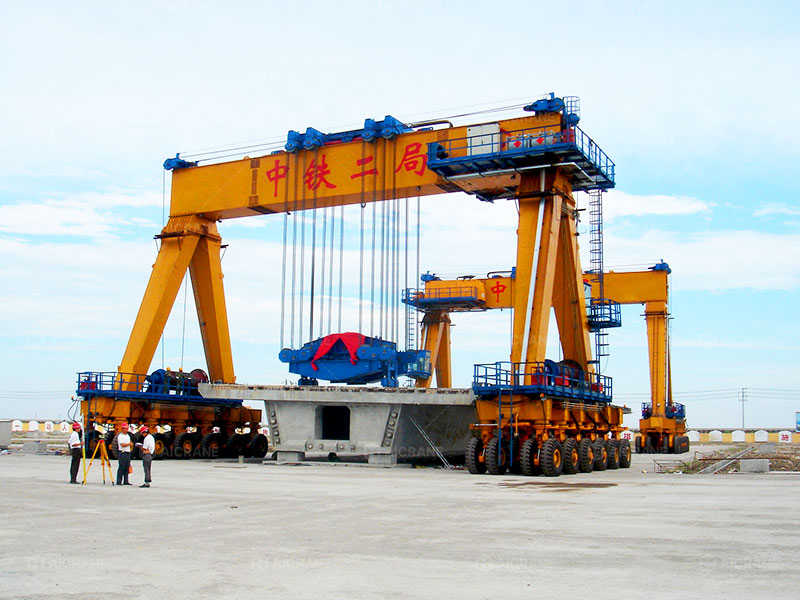
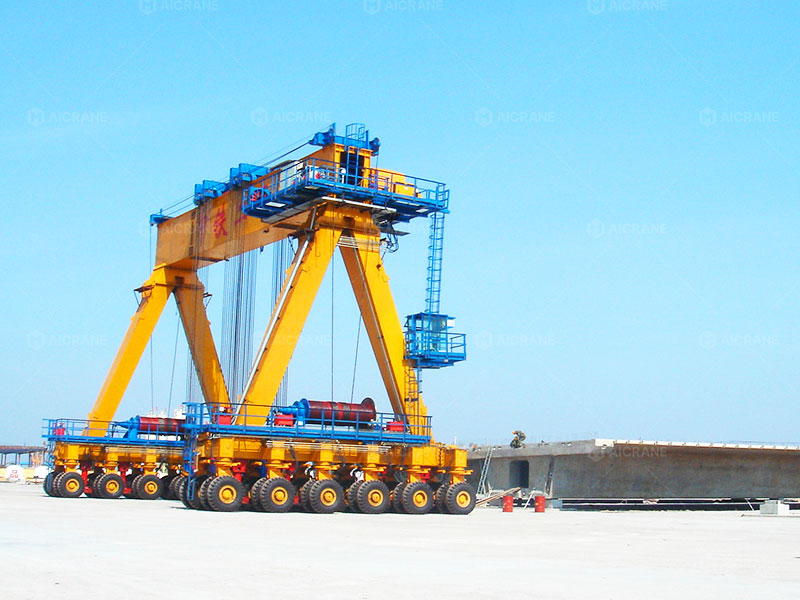
A straddle carrier is a self-propelled, rubber-tyred gantry crane that “straddles” the load, lifting it from above and transporting it across the yard. It combines lifting, moving, and stacking functions into one integrated machine, making it ideal for precast and heavy industrial applications.
Below are the most common precast yard problems and how straddle cranes effectively solve them.
1. Inefficient Material Handling and Excessive Equipment Dependency
Many precast yards depend on multiple machines such as forklifts, overhead cranes, trailers, and gantry systems to move products between production stages. This fragmented workflow leads to:
- Multiple handling steps for a single precast element
- High coordination complexity between machines
- Increased operational delays
- Higher labor and fuel costs
Each transfer stage adds time and increases the risk of damage.
How straddle cranes solve this problem
A straddle crane integrates lifting and transportation into a single system. It can:
- Lift precast elements directly from casting beds
- Transport them across the yard
- Stack them in storage or loading zones
By eliminating multiple transfer points, the rubber tyred crane significantly simplifies workflow and improves production efficiency.
2. High Risk of Product Damage During Handling
Precast concrete products are heavy but sensitive to improper handling. Common damage includes:
- Edge chipping and corner breakage
- Surface cracks
- Structural deformation
- Impact damage during transport
These issues often result from forklift pressure points or unstable lifting methods.
How straddle cranes solve this problem
Straddle carriers lift loads from above using a gantry structure, ensuring:
- Even load distribution without point pressure
- No direct contact with forks or clamps
- Stable vertical lifting without side stress
- Reduced swinging during movement
Because the load is fully supported and enclosed within the crane frame, the risk of damage is significantly reduced.
3. Congested Yard Layout and Poor Space Utilization
Precast yards are typically crowded with molds, storage stacks, reinforcement areas, and transport lanes. This leads to:
- Narrow operating space
- Inefficient traffic flow
- Limited storage capacity
- Equipment congestion
Traditional forklifts and cranes require wide maneuvering space, reducing usable yard area.
How straddle cranes solve this problem
Straddle carriers are designed for compact yard environments. Their advantages include:
- Ability to straddle and move directly over stored loads
- Narrow aisle operation capability
- Efficient vertical stacking of precast components
- Reduced need for wide turning space
This allows precast concrete yards to significantly increase storage density and optimize land usage.
4. Slow Production Flow and Operational Bottlenecks
Precast production involves multiple stages such as casting, curing, storage, and dispatch. Inefficient handling creates bottlenecks between these stages.
Common issues include:
- Waiting time for forklifts or cranes
- Delayed transfer between zones
- Unbalanced production flow
- Reduced daily output capacity
How straddle cranes solve this problem
Straddle carriers improve workflow speed by:
- Enabling direct transport between production stages
- Reducing waiting time for secondary equipment
- Supporting continuous handling cycles
- Shortening overall material transfer time
This results in a smoother and faster production flow.
5. Safety Risks in Heavy Load Handling
Precast yards involve frequent movement of heavy suspended loads, creating safety hazards such as:
- Load dropping incidents
- Worker exposure to lifting zones
- Equipment collisions in narrow areas
- Unstable lifting conditions
How straddle cranes solve this problem
Straddle carriers enhance operational safety through:
- Stable load enclosure during lifting
- Reduced reliance on suspended slings
- Controlled speed and movement systems
- High operator visibility cabins
- Anti-sway and overload protection systems
These features significantly reduce accident risks in precast operations.
6. High Equipment Wear and Maintenance Costs
Using multiple machines increases maintenance complexity and cost, including:
- Forklift tire and hydraulic wear
- Crane rope and sling replacement
- Fuel and energy consumption
- Frequent breakdown risks
How straddle cranes solve this problem
Straddle carriers reduce equipment dependency by centralizing operations into one machine, resulting in:
- Lower total equipment usage
- Reduced mechanical wear across systems
- Simplified maintenance management
- Longer service life of handling equipment
This leads to lower long-term operational costs.
7. Poor Storage Organization and Yard Management
Without structured handling systems, precast yards often suffer from:
- Random stacking of products
- Poor inventory tracking
- Inefficient retrieval processes
- Wasted storage space
How straddle cranes solve this problem
Straddle carriers improve yard organization by enabling:
- Precise placement of precast elements
- Structured stacking layouts
- Efficient vertical storage systems
- Clear separation of production zones
This improves both logistics efficiency and inventory management.
8. Limited Flexibility in Handling Different Precast Sizes
Precast yards produce a wide variety of components, including:
- Small wall panels
- Long bridge beams
- Large tunnel segments
- Irregular structural elements
Traditional equipment often lacks flexibility for such variation.
How straddle cranes solve this problem
Straddle carriers offer high adaptability through:
- Adjustable span configurations
- Flexible lifting systems
- Capability to handle various load sizes
- Custom-designed structural options
This makes them suitable for diverse precast production requirements.
9. Dependence on Large and Complex Labor Coordination
Traditional precast handling systems require multiple operators, including:
- Forklift drivers
- Crane operators
- Signal workers
- Transport coordinators
This increases communication complexity and risk of human error.
How straddle cranes solve this problem
Straddle carriers simplify operations by allowing:
- Single-operator control systems
- Reduced manpower requirements
- Fewer coordination errors
- More standardized workflows
Automation features further reduce reliance on manual coordination.
10. Difficulty Scaling Production Capacity
As precast demand increases, many yards struggle with scaling due to:
- Limited handling efficiency
- Space constraints
- Equipment bottlenecks
- Increased operational complexity
How straddle cranes solve this problem
Straddle carriers support scalability by:
- Increasing handling throughput per cycle
- Reducing transfer delays
- Handling larger and heavier precast units
- Improving overall yard logistics efficiency
This makes them ideal for both medium and large-scale precast production facilities.
Conclusion
Precast yards face multiple operational challenges, including inefficient material handling, safety risks, congestion, and high equipment costs. Traditional systems relying on forklifts and multiple machines often increase complexity and reduce efficiency.
A straddle crane (straddle carrier) provides a highly effective solution by combining lifting, transport, and stacking into one integrated mobile gantry system. Its key advantages include:
- Simplified material handling
- Reduced product damage
- Improved yard space utilization
- Faster production cycles
- Enhanced operational safety
- Lower maintenance costs
- Greater flexibility for different precast products
As precast construction continues to grow globally, straddle carriers are becoming a core solution for modern, high-efficiency precast yard operations.