
Buying a concrete pump is a capital investment that affects a contractor’s cash flow, project capacity, and long-term profitability. In the Philippines, the time required to recover this investment depends on more than the pumpcrete price Philippines. Monthly pumping hours, rental demand, operating expenses, equipment utilization, and payment collection all influence the payback period. A pump working regularly on residential buildings, commercial developments, or infrastructure projects may recover its cost much faster than one used only for occasional pours.
For contractors evaluating a purchase, the key question is not simply how much a concrete pump costs, but how much income it can generate after expenses. A practical payback calculation helps compare different equipment configurations, estimate the required workload, and determine whether buying or renting is more suitable for the business. The following sections explain how to estimate the recovery period using realistic operating assumptions and a straightforward financial framework.
What Determines the Payback Period of a Concrete Pump?
The payback period is the time required for the cumulative net cash generated by a concrete pump to equal the initial investment. It is different from the machine’s service life or accounting depreciation period. A pump may remain operational for many years, but its investment recovery depends on how frequently it works and how much money remains after operating expenses.
For Philippine contractors, three variables deserve particular attention: the total acquisition cost, the average monthly contribution from pumping operations, and the consistency of project demand. A lower purchase price does not automatically guarantee faster recovery. If the machine has insufficient capacity for contracted work or spends long periods idle, its financial performance may be weaker than that of a more suitable model.
Initial Investment and Additional Setup Costs
The initial investment includes the equipment purchase price, freight, import-related charges where applicable, inland transportation, installation, pipeline accessories, and commissioning. Depending on the machine and project requirements, contractors may also need to budget for operator training, spare parts, insurance, and working capital.
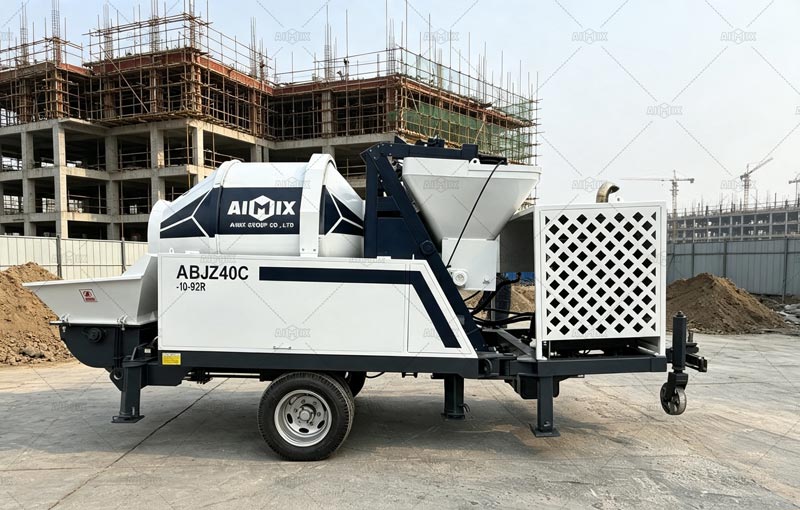
When comparing a concrete pump for sale Philippines suppliers offer, buyers should calculate the complete cost of putting the equipment into productive service rather than comparing quoted prices alone. A machine that arrives with the required pipeline kit and commissioning support may involve a different overall investment from one that requires substantial additional purchases.
Monthly Revenue and Equipment Utilization
Revenue depends on the local charging arrangement. Contractors may bill by the cubic meter, by the pumping hour, or through a project-based service agreement. Minimum mobilization charges and transportation fees can also affect the amount earned per job.
Utilization is equally important. A pump scheduled for several projects each month can generate more revenue than an identical machine used sporadically. However, high utilization only improves returns when the agreed rates cover fuel or electricity, labor, maintenance, transport, and other operating costs.
How to Calculate Concrete Pump Cost Recovery
A reliable estimate starts with net operating cash contribution rather than gross revenue. Contractors should calculate how much money remains from pumping activities after routine expenses and use that amount to estimate how quickly the initial investment can be recovered.
The Basic Payback Formula
The simplest calculation is:
Payback period = Initial investment ÷ Average monthly net cash contribution
Monthly net cash contribution can be estimated as:
Monthly net contribution = Pumping revenue − Monthly operating expenses
For example, if a machine costs PHP 1.8 million to acquire and generates PHP 150,000 in monthly net cash contribution, the estimated simple payback period is 12 months.
This calculation assumes consistent monthly performance. It does not account for financing interest, taxes, major unexpected repairs, or changes in demand unless those costs are included in the figures. For financed purchases, the contractor should separately evaluate loan repayments and available cash flow.
A Practical Calculation Example
Consider a hypothetical contractor purchasing a concrete pump machine for PHP 2 million. The following figures illustrate how monthly workload can affect investment recovery.
| Financial item | Illustrative amount |
|---|---|
| Total initial investment | PHP 2,000,000 |
| Monthly pumping revenue | PHP 350,000 |
| Monthly operating expenses | PHP 180,000 |
| Monthly net cash contribution | PHP 170,000 |
| Estimated simple payback period | 11.8 months |
Under these assumptions, the investment could be recovered in approximately 12 months. The figures are illustrative, not verified Philippine market averages or a supplier quotation.
If the monthly net contribution falls to PHP 100,000 because of fewer projects or higher expenses, the payback period extends to 20 months. If it rises to PHP 220,000, the period decreases to approximately 9.1 months.
The lesson is straightforward: actual utilization and operating margins often matter as much as the initial purchase price.
Which Factors Can Shorten or Extend the Recovery Period?
Project Demand and Pumping Frequency
Demand for concrete pumping can come from residential construction, mid-rise buildings, commercial developments, roadworks, and other projects requiring concrete placement in locations that are difficult to reach with conventional discharge methods.
Contractors with recurring customers or confirmed project schedules can estimate utilization more confidently. By contrast, businesses relying on occasional orders should use conservative workload assumptions. Before purchasing equipment, it is useful to estimate the number of billable working days per month and the likely volume of concrete pumped on each day.
Operating Expenses and Maintenance
Operating expenses include fuel or electricity, operator wages, helpers, pipeline cleaning, wear parts, hydraulic maintenance, and transportation between job sites. Long pipeline runs, frequent relocation, abrasive concrete mixtures, and demanding site conditions may increase maintenance requirements.
Preventive maintenance can help reduce unplanned downtime, but it still requires budgeting. Contractors should also establish a reserve for major repairs instead of assuming that every month will produce the same net contribution.
Payment Terms and Seasonal Workloads
Cash flow can become a constraint even when a project appears profitable. Some customers pay after inspection, progress approval, or completion of agreed milestones. Delayed collection means the contractor may need to cover wages, fuel, and maintenance before receiving payment.
Weather disruptions and gaps between projects can also reduce working days. A realistic recovery forecast should therefore include low-utilization months and collection delays rather than relying entirely on the most productive operating scenario.
Choosing the Right Concrete Pump for the Philippine Market
Equipment selection should match the type of work, required output, pipeline distance, concrete mix, site access, and available power or fuel supply. The appropriate configuration is the one that meets actual placement requirements without creating unnecessary capital and operating costs.
Stationary Pumps for Pipeline Concrete Placement
A stationary pump can be suitable for building projects where concrete must be delivered through pipelines to upper floors or other designated placement points. Its practical reach depends on the pump model, concrete characteristics, pipeline layout, and site conditions.
When evaluating a stationary pumpcrete Philippines contractors may use for ongoing projects, buyers should examine rated output, pumping pressure, engine or motor configuration, spare-parts availability, and after-sales support. Rated capacity is not the same as guaranteed output on every job; actual performance depends on the complete pumping system and working conditions.
Comparing Purchase Price with Working Capacity
The lowest-priced machine may not provide the best financial result if it cannot meet project requirements. Conversely, purchasing a larger pump than the business regularly needs can increase capital costs and leave capacity underused.
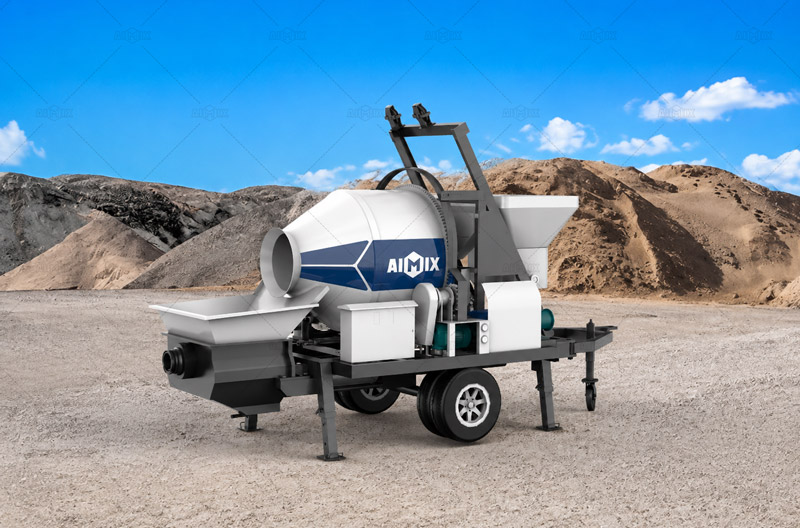
Contractors comparing the concrete pump mixer price in the Philippines should first clarify whether the quotation covers a stationary concrete pump, a concrete mixer pump, or another equipment configuration. These machines perform different functions, so their purchase prices and operating economics should not be compared as if they were interchangeable.
Requesting an itemized quotation helps clarify the included accessories, pipeline package, warranty, delivery arrangements, and commissioning requirements. This provides a more dependable basis for calculating the total investment and expected payback.
How Can Contractors Improve Their Return on Investment?
Several practical measures can strengthen the financial performance of a concrete pump.
- Secure work before purchasing: Review existing contracts, recurring customers, and realistic project demand.
- Calculate a conservative workload: Estimate billable pumping hours or cubic meters using achievable operating conditions.
- Track each project’s margin: Record revenue, labor, fuel, transport, cleaning, and maintenance expenses.
- Reduce idle time: Coordinate equipment schedules and pipeline preparation to minimize delays between jobs.
- Protect equipment availability: Follow preventive maintenance intervals and keep essential wear parts available.
- Manage collections: Agree on mobilization payments, progress billing, or other suitable payment milestones where commercially feasible.
A monthly cash-flow forecast is particularly useful. It shows whether the business can meet operating expenses during slower periods while still making progress toward recovering the purchase cost.
Frequently Asked Questions
How many months does it take to recover the cost of a concrete pump in the Philippines?
There is no universal payback period. A pump generating PHP 150,000 in monthly net cash contribution on a PHP 1.8 million investment would have a simple estimated payback period of 12 months. Actual results depend on utilization, expenses, financing, and payment collection.
Is buying a concrete pump better than renting one?
Buying may suit contractors with recurring pumping demand and sufficient working capital. Renting may be more appropriate for occasional projects or businesses testing a new market. The decision should compare ownership costs against rental charges for the expected workload.
What information is needed to estimate payback accurately?
The essential inputs are the complete acquisition cost, expected monthly pumping revenue, operating expenses, realistic working days, financing terms, and expected customer payment schedule. Estimates become more reliable when supported by actual project records or confirmed contracts.
Does a higher-capacity concrete pump recover its cost faster?
Not necessarily. Higher capacity can support more demanding projects, but faster recovery occurs only when additional productive output generates enough extra net cash to justify the higher investment and operating costs.
Conclusion
Recovering the cost of concrete pump in the Philippines depends on the relationship between initial investment, productive utilization, and net operating cash contribution. A simple payback formula provides a useful starting point, but a credible decision also accounts for maintenance, financing, downtime, and delayed payments.
Before purchasing, contractors should compare equipment configurations against their expected projects, request a complete quotation, and prepare conservative, moderate, and high-utilization scenarios. This approach turns the payback period from a rough guess into a practical investment planning tool.