
The construction industry across Mexico and Central America is undergoing a massive structural shift. Driven by rapid urban expansion, major infrastructure investments, and strict environmental restrictions on riverbed dredging, regional aggregate producers are modernizing their processing facilities at an unprecedented pace. Traditional quarrying operations, which historically focused on producing low-margin coarse road base and simple construction aggregates, are evolving into sophisticated, highly technical processing facilities. Upgrading a legacy site into a modern, high-efficiency stone crusher plant allows forward-thinking operators to capture high-margin opportunities in the manufactured sand market.
Manufactured sand (M-sand) serves as a direct, engineered alternative to natural river sand in concrete, asphalt, mortar, and specialized dry-mix formulations. Converting raw quarry rock into high-specification sand demands precise reduction technology, advanced air classification, and multi-stage screening processes. By optimizing process flow and selecting equipment built for abrasive feeds, a modern stone crusher plant(planta trituradora de piedra) and aggregate crusher plant can achieve exceptional cubical particle shaping, controlled fines gradation, and reduced operating costs—turning abundant regional stone into a premium, high-value building product.
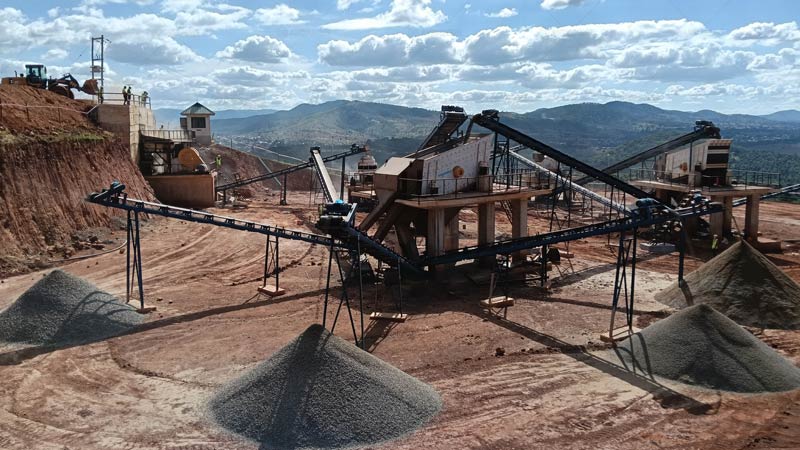
Drivers of Manufactured Sand Adoption in the Region
Several economic, regulatory, and technical factors are pushing aggregate producers across Mexico, Guatemala, Costa Rica, Panama, and neighboring countries to upgrade from traditional crushing setups to specialized manufactured sand lines:
- Depletion and Regulation of River Sand: Environmental authorities throughout Latin America have introduced strict laws prohibiting riverbed sand mining to protect aquatic ecosystems and prevent coastal erosion. This has created acute local shortages, forcing concrete batching plants to seek reliable manufactured alternatives.
- Infrastructure Megaprojects: Major highways, railways, bridges, and commercial developments across Mexico and Central America require high-performance concrete with strict grain shape and gradation standards to guarantee long-term structural integrity.
- Higher Profit Margins per Ton: Fine-graded, high-specification manufactured sand commands significantly higher market prices per ton compared to untreated ballast, crushed gravel, or unwashed quarry dust.
- Consistency in Concrete Mix Design: Unlike natural river sand, which varies in quality, silt content, and organic impurities depending on the harvest site, manufactured sand delivers consistent chemical purity, uniform particle size distribution, and predictable water consumption in concrete mixes.
Key Stages in the High-Value Transformation Process
Converting blasted run-of-mine quarry rock into high-value engineered sand is a multi-step thermodynamic and mechanical journey. Each reduction stage serves a distinct purpose in systematically reducing particle size while optimizing individual grain geometry.
Primary and Secondary Reduction Stages
The transformation begins at the primary receiving hopper, where heavy-duty equipment handles large run-of-mine feed directly from the quarry face. A heavy-duty primary stone crusher(trituradora de piedra) reduces large boulders down to manageable secondary feed sizes, usually under six to eight inches. Material then moves seamlessly to secondary cone crushers or heavy impactors for intermediate sizing. At this initial stage, maintaining a consistent feed rate via automated vibrating feeders is essential to prevent equipment choking, balance motor loads, and maintain overall plant efficiency.
Tertiary Shaping and Fine Sand Generation
The real transition from standard coarse aggregate to high-value manufactured sand occurs in the tertiary and quaternary stages. Specialized vertical shaft impactors (VSI) act as dedicated sand-making machines within the production line. By utilizing high-speed centrifugal acceleration and rock-on-rock collision, a specialized VSI stone crusher shapes jagged particles into smooth, cubical grains while generating the necessary fine sand fractions. This high-velocity impact process improves particle packing density and significantly reduces the void ratio, directly lowering the cement paste volume required in final concrete batching.
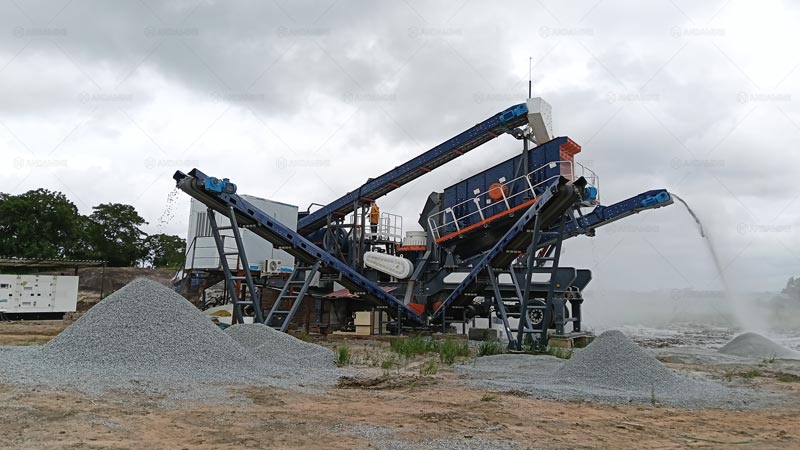
Comparing Traditional Quarries vs. Modern High-Value Processing Plants
Implementing advanced crushing, screening, and air-classification technology fundamentally alters plant performance, yield quality, final product versatility, and long-term operating economics.
| Parameter | Traditional Quarry Plant | Modern High-Value Sand Plant |
|---|---|---|
| Primary Product Focus | Coarse gravel, ballast, simple road base | Spec-grade manufactured sand, fine aggregate blends |
| Particle Geometry | Flaky, elongated, highly angular shapes | Highly cubical, rounded edges, uniform distribution |
| Equipment Configuration | Basic jaw and cone crusher setups | Multi-stage jaw, cone, VSI, and air classifiers |
| Quality Control Systems | Manual sampling, basic mesh screening | Automated feed controls, online gradation monitors |
| Market Value & Margins | Low to moderate market prices | High profitability with long-term supply contracts |
Overcoming Regional Operational Challenges
Operating an advanced, continuous-duty aggregate crusher plant(planta trituradora de agregados de servicio continuo) across Latin America presents specific geographic, climatic, and geological challenges that plant operators must navigate carefully:
Managing High Moisture and Fine Particle Classification
Central America’s tropical climate brings high humidity and heavy seasonal rainfall, while arid regions in northern Mexico suffer from acute water scarcity. In dry regions, dry air classification systems allow modern plants to separate excess micro-fines (sub-75 micron particles) without consuming millions of gallons of water. In wet tropical regions, efficient hydro-cyclones, log washers, and high-frequency dewatering screens ensure output sand stays within strict moisture specifications without blinding screen media.
Equipment Maintenance in Abrasive Basalt and Granite Formations
Much of the bedrock across Mexico and Central America consists of highly abrasive volcanic basalt, hard granite, and dense limestone. Processing these tough rock types through a standard rock crusher causes severe abrasive wear on blow bars, anvil rings, rotor tips, and liner plates. Successful plant operators combat this by implementing rigorous preventive maintenance programs, automated central lubrication systems, and specialized high-chromium or manganese alloy wear components that maximize equipment uptime and lower operating cost per ton.
Best Practices for Maximizing Plant Return on Investment
To ensure a smooth transition from a basic aggregate site to a high-value sand producer, facility owners should follow a clear operational roadmap. First, conduct thorough petrographic testing of the raw feed stone to understand its silica content, abrasiveness, and fracture characteristics. Second, design the plant layout with modular flexibility, allowing for easy expansion as local demand for specialized sand grades grows. Finally, invest in continuous operator training and automated control software to keep equipment running at peak choke-feed conditions without human error.
Future Outlook for Regional Aggregate Producers
The shift toward engineered manufactured sand alternatives is not a passing trend; it represents a permanent structural transformation in Latin American construction standards. Producers in Mexico and Central America who invest in modernizing their stone crusher plant configurations position themselves at the forefront of the regional building material supply chain. By integrating specialized tertiary rock crushers(trituradora de rocas), high-efficiency air classifiers, and intelligent plant automation, aggregate businesses can turn local geological resources into sustainable, high-value products that power the future of regional infrastructure development.