
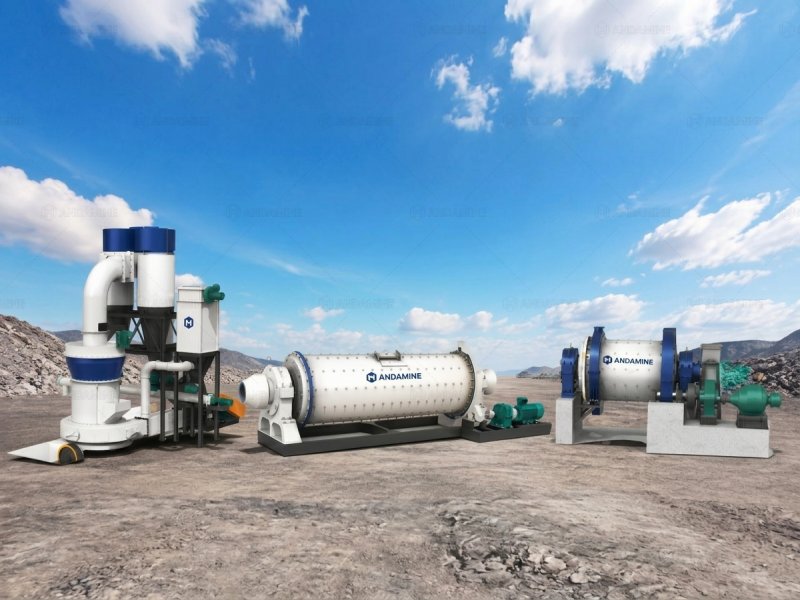
A more powerful grinding mill machine may appear to be the obvious choice for increasing powder production. Higher motor power and greater theoretical capacity can suggest that more material can be processed in less time. However, grinding profitability depends on much more than the maximum power available. If the feed material, target fineness, classification system, energy consumption, and downstream demand are not properly matched, a larger mill can increase operating costs without generating proportional revenue.
Production Capacity Is Only One Part of Profitability
The first mistake in evaluating a grinding mill machine is treating capacity as the main measure of economic performance. A mill capable of processing more tons per hour is not necessarily more profitable if the additional output cannot be sold at a suitable price.
Profitability depends on the relationship between production volume, product value, energy consumption, maintenance costs, labor, and market demand. For example, producing a very fine powder may require substantially more grinding energy than producing a coarser product. If customers do not pay a premium for the additional fineness, the extra processing cost can reduce the margin per ton.
This means the objective should not simply be to maximize tons per hour. A better target is to produce the required product specification at the lowest practical cost while maintaining stable quality.
More Motor Power Can Mean Higher Energy Costs
Grinding is one of the more energy-intensive stages in mineral processing. Increasing the installed power of a grinding mill machine can provide greater grinding force, but it also increases the potential electricity consumption of the system.
The actual energy required depends on factors such as material hardness, feed size, moisture, required product fineness, and grinding efficiency. If a high-powered mill is operated below an efficient loading level, part of its capacity may remain unused while the project still carries the cost of a larger motor, electrical system, and supporting equipment.
For this reason, equipment selection should consider energy consumption per ton rather than motor power alone. A slightly smaller mill operating consistently at an efficient load can sometimes deliver better economics than a much larger machine running far below its potential capacity.
Feed Preparation Determines How Hard the Mill Has to Work
The grinding stage does not begin when material enters the mill. Upstream crushing and feed preparation have a direct effect on grinding efficiency. Large or inconsistent feed particles require greater energy to reduce to the desired size.
Proper pre-crushing can reduce the workload placed on the grinding mill machine by delivering a more suitable feed size. It can also improve feed consistency, allowing the mill to operate under more stable conditions.
This is particularly important when processing hard minerals. Instead of solving low output simply by installing a more powerful mill, operators should first determine whether excessive feed size or poor feed control is creating the bottleneck.
Target Fineness Can Change the Economics
Product fineness has a major influence on grinding costs. Reducing particles from several millimeters to a fine powder requires substantially more size reduction than producing a relatively coarse product. As fineness requirements become stricter, energy consumption and circulating load can increase.
A powerful grinding mill machine does not eliminate this relationship. If the production target is unnecessarily fine, the plant may spend additional energy processing material beyond what the customer actually requires.
The most economical approach is therefore to define the required particle-size distribution first. The grinding system can then be designed around that specification rather than selecting the largest available mill and attempting to maximize its output.
Classification Can Matter More Than Mill Power
In many powder production systems, the classifier plays an important role in determining final product quality. Its job is to separate particles according to size and return oversize material for additional grinding.
If classification is inefficient, a powerful mill may not solve the problem. Fine particles can be repeatedly ground, increasing energy consumption, while oversize particles may continue circulating through the system. This can create a high circulating load without delivering a proportional increase in saleable product.
Improving classification efficiency can therefore be more economical than simply increasing grinding capacity. A well-matched mill and classifier can produce the required fineness with better control over energy use and circulating material.
A Ball Mill Machine Shows Why System Matching Matters
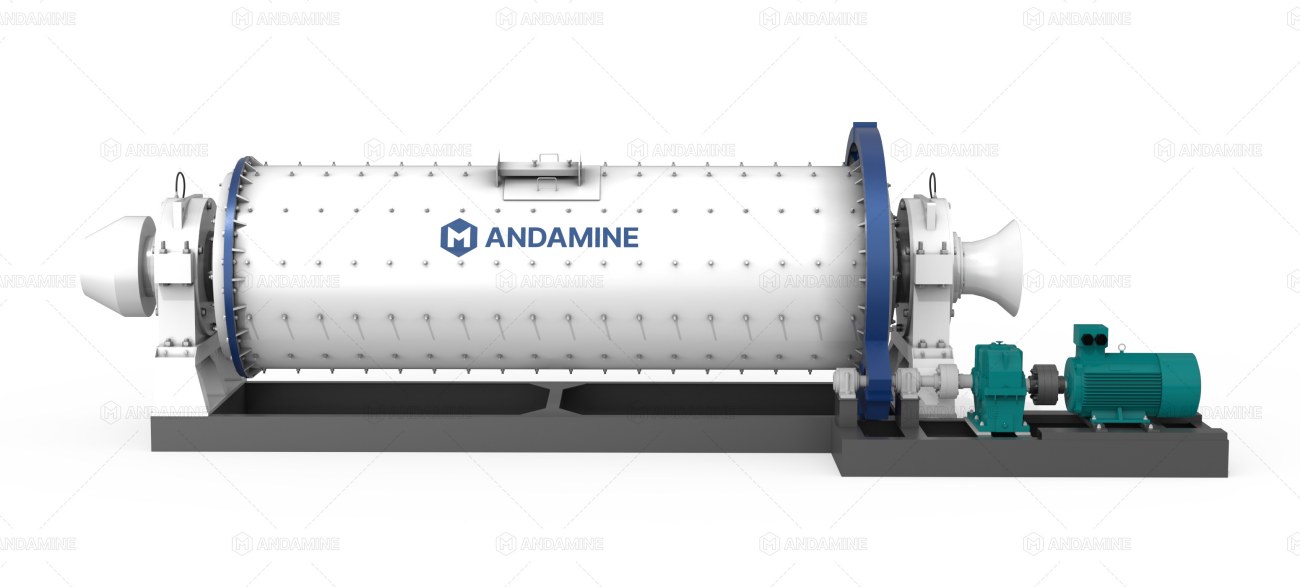
A ball mill machine provides a useful example of why grinding performance should be evaluated as a complete system. Its performance depends not only on the mill itself but also on feed size, grinding media, filling level, material characteristics, residence time, and classification.
Increasing the size or power of the ball mill machine without matching these factors can create an imbalance elsewhere in the circuit. The mill may have greater theoretical capacity, but conveyors, classifiers, separators, dust collection equipment, or downstream handling systems may become the actual limitations.
Consequently, the useful capacity of a grinding circuit is determined by the interaction of its major components rather than by the largest specification on an individual machine.
Maintenance Costs Also Affect the Final Margin
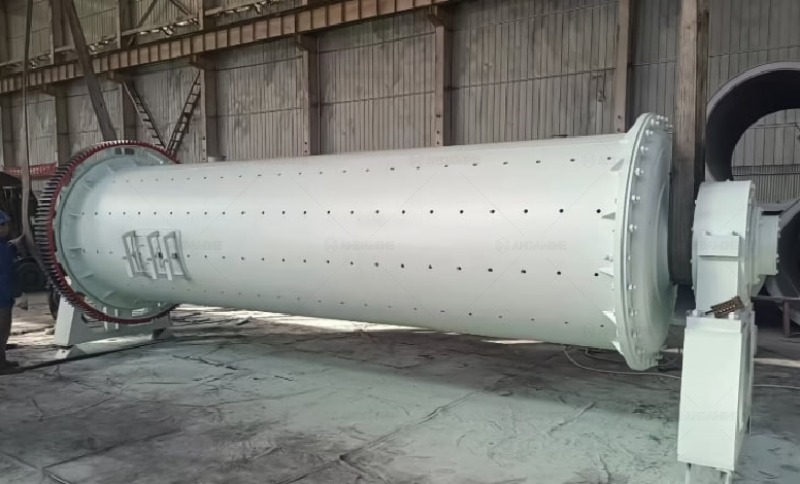
A larger grinding mill machine generally involves a larger mechanical and electrical system. Higher production may justify this investment in a high-volume operation, but the additional equipment can also bring higher maintenance requirements and replacement costs.
Wear on grinding components, bearings, liners, grinding media, and other parts directly affects the cost of producing each ton of powder. Frequent maintenance can also reduce plant availability, meaning that theoretical capacity does not necessarily translate into actual annual production.
A more profitable grinding system therefore needs to balance capacity with reliability. Stable production at a predictable cost can be more valuable than occasional periods of very high output followed by extended maintenance downtime.
Market Demand Should Shape Mill Selection
The final question is not simply how much powder a grinding mill machine can produce, but how much powder the market can absorb at a profitable price. Different industries may require different grades, fineness levels, and material characteristics.
If demand is limited, installing excessive grinding capacity can tie up capital that could otherwise be used for raw material preparation, storage, transportation, automation, or other parts of the production system. Conversely, a growing market may justify higher capacity if the additional production can be sold consistently.
This makes market demand an important part of equipment planning. Capacity should follow realistic sales requirements rather than being selected solely according to the maximum output advertised for a machine.
How to Evaluate a Grinding Mill by Profitability
A practical evaluation should look beyond motor power and rated capacity. Important questions include:
- Feed size: Is the material adequately crushed before grinding?
- Material properties: How hard, abrasive, or moisture-sensitive is the feed?
- Product fineness: What particle size does the market actually require?
- Energy consumption: How much electricity is required per ton of finished powder?
- Classification: Can the system separate finished material efficiently without excessive recirculation?
- Maintenance: How will wear parts and downtime affect annual production?
- Market demand: Can the additional output be sold at a sufficient margin?
These factors provide a more realistic basis for comparing grinding systems than power rating alone.
Conclusion
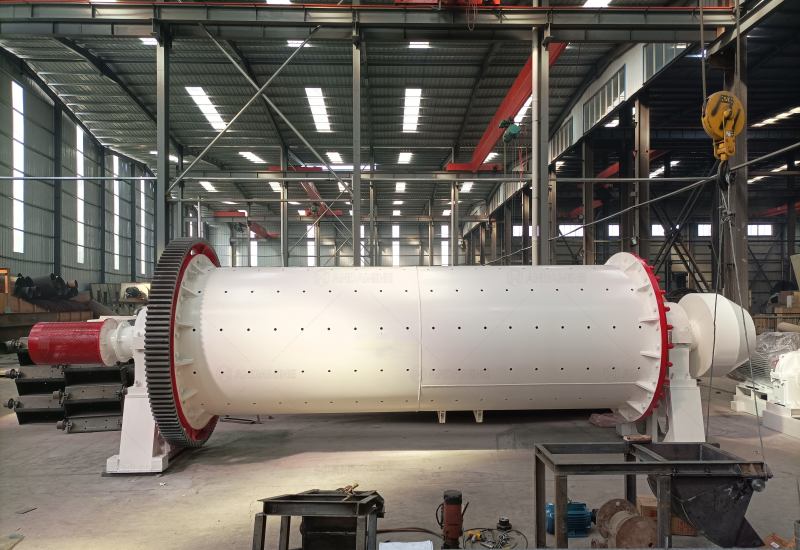
A more powerful grinding mill machine can increase production potential, but higher capacity does not automatically translate into higher profit. Energy consumption, feed preparation, product fineness, classification efficiency, maintenance, and market demand all influence the final cost per ton and the value of the finished powder.
For projects that need to select or configure grinding equipment, Andamine provides grinding equipment and complete grinding solutions based on material characteristics, required fineness, production capacity, and overall process requirements. The goal is not simply to install the most powerful mill, but to build a grinding system that converts raw material into saleable powder efficiently and economically.