
When planning an aggregate production operation, the initial purchase price of equipment often gets the most attention. However, experienced quarry managers and contractors know that the real financial picture only becomes clear when you evaluate long-term operating costs. From fuel consumption and wear parts to maintenance labor and downtime, these recurring expenses can easily exceed the capital cost within the first few years of operation. This guide provides a practical framework for assessing the total cost of ownership for any aggregate crusher plant, whether you are operating a stationary limestone crusher, a flexible mobile stone crusher plant, or a dedicated gravel crusher for riverbed materials.
Understanding the True Cost of Crushing
Long-term operating costs go far beyond electricity bills. A comprehensive assessment must account for every expense that keeps the aggregate crusher plant(planta chancadora de áridos) running day after day. Many operators focus only on direct production costs while overlooking hidden factors such as downtime losses, training requirements, and environmental compliance.
Key Cost Categories to Track
To build an accurate long-term cost model, break down all expenses into the following categories:
- Wear parts and consumables (jaw plates, blow bars, screens, belts)
- Fuel or electricity consumption per ton produced
- Maintenance labor and scheduled service intervals
- Unscheduled downtime and lost production revenue
- Operator training and turnover costs
- Lubricants, filters, and hydraulic fluids
- Environmental controls (dust suppression, water treatment)
Each category affects the bottom line differently depending on the type of equipment. For example, a limestone crusher processing soft, abrasive stone will have very different wear part costs compared to a gravel crusher handling hard river rock.
Analyzing Wear Part Life and Cost per Ton
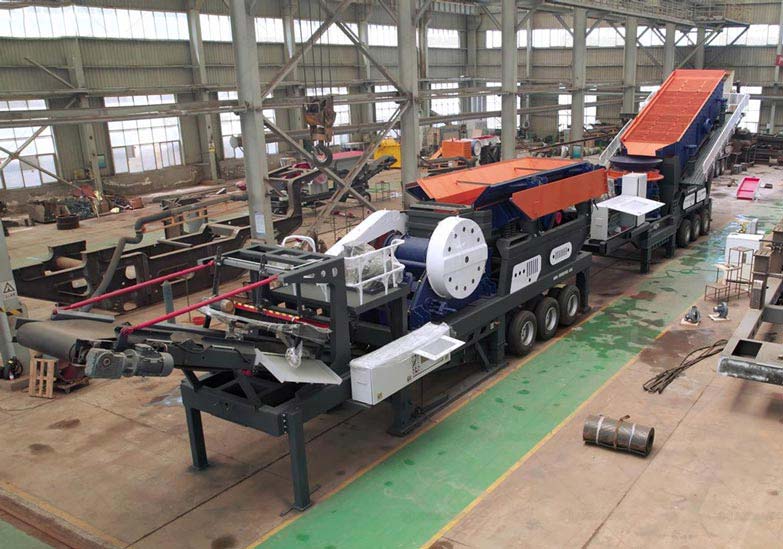
Wear parts represent the largest variable cost in any aggregate crusher plant. The rate at which crusher liners, blow bars, and screen media wear out depends on several factors: material hardness, feed size, moisture content, and crusher settings.
Calculating Wear Cost per Ton
To assess this expense accurately, use the following formula across all equipment types, from a stationary limestone crusher(una trituradora de caliza estacionaria) to a mobile stone crusher plant:
Wear cost per ton = (cost of wear part set ÷ expected tonnage before replacement)
For example, if jaw plates for your gravel crusher cost $4,000 and last for 80,000 tons, the wear cost is $0.05 per ton. However, if the same gravel crusher processes highly abrasive quartzite instead of rounded river gravel, the life might drop to 40,000 tons, doubling the wear cost to $0.10 per ton. Always request wear life data from multiple suppliers and verify with real-world references.
Comparing Wear Costs Across Equipment Types
| Crusher Type | Typical Wear Part | Expected Life (Tons) | Cost per Ton (Approx.) |
|---|---|---|---|
| Limestone crusher (impact type) | Blow bars | 60,000 – 100,000 | $0.03 – $0.06 |
| Gravel crusher (jaw/cone) | Jaw plates + mantle | 80,000 – 120,000 | $0.04 – $0.08 |
| Mobile stone crusher plant | All wear parts combined | 40,000 – 80,000 | $0.06 – $0.12 |
| Aggregate crusher plant (multi-stage) | Multiple sets | Variable by stage | $0.08 – $0.15 |
A limestone crusher typically has lower wear costs than a gravel crusher handling harder, more angular material. However, a mobile stone crusher plant may incur higher per-ton wear costs due to more frequent start-stop cycles and varying feed conditions.
Energy Consumption: Fuel vs. Electric Power
Energy costs are the second-largest operating expense in most aggregate crusher plant operations. The choice between diesel-powered and electric-driven equipment has profound long-term implications.
Comparing Energy Sources
For a mobile stone crusher plant operating at multiple sites, diesel power offers flexibility but at a higher cost per ton. Electric-driven stationary plants have lower per-ton energy costs but require grid connection or generator investment. Use these benchmarks for your assessment:
- Diesel-powered gravel crusher: $0.35 – $0.55 per ton (including fuel, delivery, and generator maintenance)
- Electric-powered limestone crusher: $0.08 – $0.15 per ton (grid power, assuming $0.12/kWh)
- Mobile stone crusher plant with hybrid system: $0.20 – $0.30 per ton
Over five years of continuous operation, the energy cost difference between a diesel mobile stone crusher plant and an electric aggregate crusher plant can exceed $500,000. When assessing long-term costs, also factor in future carbon taxes or emissions regulations that may affect diesel-powered equipment.
Maintenance Labor and Scheduled Downtime
Labor costs vary significantly by region and equipment complexity. A gravel crusher with easy access to wear parts will have lower labor costs per ton than a poorly designed aggregate crusher plant that requires hours of disassembly for routine maintenance.
Estimating Annual Maintenance Hours
Based on industry data from multiple aggregate crusher plant installations, use these estimates for your long-term cost model:
| Equipment Type | Scheduled Maintenance (hours/year) | Unscheduled Downtime (hours/year) | Labor Cost per Ton ($) |
|---|---|---|---|
| Limestone crusher (fixed) | 150 – 250 | 30 – 60 | $0.02 – $0.04 |
| Gravel crusher (portable) | 200 – 350 | 50 – 100 | $0.03 – $0.06 |
| Mobile stone crusher plant | 250 – 400 | 60 – 120 | $0.04 – $0.08 |
| Large aggregate crusher plant | 300 – 500 | 80 – 150 | $0.05 – $0.10 |
A well-designed limestone crusher with easy access to the crushing chamber can reduce maintenance labor by 30% compared to a cramped design. For a mobile stone crusher plant(Para una planta chancadora móvil), consider the cost of transporting service technicians to remote sites, which can double effective labor rates.
Downtime Costs: The Hidden Expense
Lost production is often the most underestimated cost in aggregate production. When a gravel crusher breaks down, the entire operation stops, but fixed costs like equipment payments, site rent, and overhead continue.
Calculating the True Cost of Downtime
Use this formula for any aggregate crusher plant or mobile stone crusher plant:
Downtime cost = (lost tons per hour × profit per ton × downtime hours) + (idle labor cost) + (express parts shipping)
For example, if a limestone crusher produces 200 tons per hour with a profit margin of $2 per ton, one 8-hour unplanned shutdown costs $3,200 in lost profit plus $800 in idle labor, plus any expedited part costs. A single major breakdown on a gravel crusher can erase an entire month’s profit margin. When comparing equipment options, ask suppliers for mean time between failures (MTBF) data and average repair times.
Training and Operator Efficiency
Complex controls lead to longer training periods and more operator errors. An aggregate crusher plant with an intuitive PLC touchscreen can reduce training time from weeks to days, directly lowering labor costs and reducing damage from improper operation.
Long-Term Labor Cost Comparison
Consider this example comparing two gravel crusher installations over five years:
- Gravel crusher A (complex manual controls): 3 weeks training per operator, 12% error-related damage, $250,000 in added labor and repair costs
- Gravel crusher B (PLC touchscreen automation): 3 days training per operator, 3% error-related damage, $70,000 in added labor and repair costs
For a mobile stone crusher plant that experiences high operator turnover, the savings from easy-to-learn controls can be substantial. Similarly, a limestone crusher with remote monitoring capabilities allows one supervisor to oversee multiple sites, reducing total labor requirements.
Environmental Compliance Costs
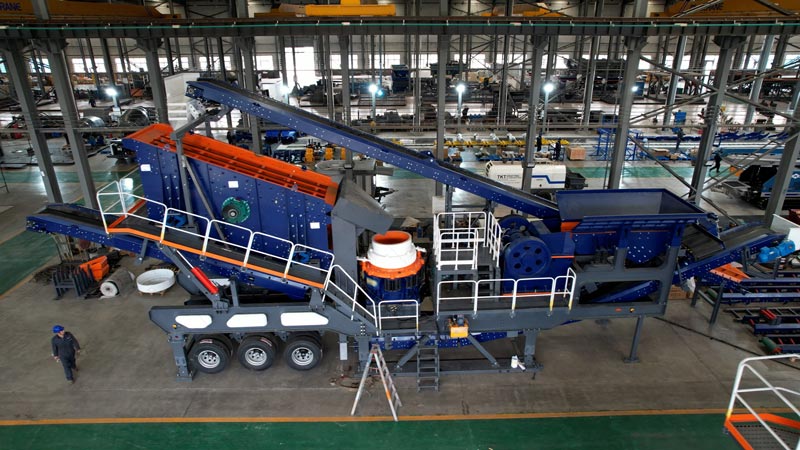
Dust suppression, noise control, and water management are increasingly expensive components of long-term aggregate production. A gravel crusher operating near residential areas(trituradora de grava y arena operando cerca de zonas residenciales) may require enclosed structures and misting systems, adding significant operating costs.
Annual Environmental Cost Estimates
Include these factors when assessing any aggregate crusher plant:
- Dust suppression water usage and pumping costs
- Filter media replacement (baghouse or wet scrubber)
- Noise barrier maintenance
- Permit fees and compliance testing
- Potential fines for exceedances
A mobile stone crusher plant that moves between sites may have lower environmental control requirements than a fixed limestone crusher in a populated area, but it also faces different risks such as fugitive dust complaints from temporary neighbors.
Creating Your 5-Year Cost Model
To make an informed decision between equipment options, build a spreadsheet model with the following annual cost categories for each candidate machine, whether a stationary gravel crusher, a limestone crusher, a mobile stone crusher plant, or a full aggregate crusher plant:
| Cost Category | Year 1 | Year 2 | Year 3 | Year 4 | Year 5 |
|---|---|---|---|---|---|
| Wear parts | $ | $ | $ | $ | $ |
| Energy | $ | $ | $ | $ | $ |
| Maintenance labor | $ | $ | $ | $ | $ |
| Downtime loss | $ | $ | $ | $ | $ |
| Environmental | $ | $ | $ | $ | $ |
| Total annual cost | $ | $ | $ | $ | $ |
Run this model for at least three different equipment configurations. You may find that a higher-priced aggregate crusher plant with better wear part life and lower energy consumption is more profitable over five years than a cheaper gravel crusher with high operating costs. Similarly, a mobile stone crusher plant that eliminates truck haulage costs may justify a higher initial investment through reduced logistics expenses.
Finally, always add a contingency factor of 15-20% for unexpected repairs and price inflation on consumables. A limestone crusher operating in a corrosive environment may need more frequent parts replacement than manufacturer estimates. A gravel crusher working with variable feed material will experience wear cost fluctuations. By building a detailed, category-by-category long-term cost assessment before purchasing any aggregate crusher plant, limestone crusher, mobile stone crusher plant, or gravel crusher, you protect your operation from unpleasant financial surprises and position yourself for sustained profitability over the equipment’s full lifecycle.