
In steel plants and foundries, few lifting operations are more dangerous than transporting molten metal. A 100-ton ladle crane is specifically engineered to handle liquid steel, molten iron, or other high-temperature materials under extreme operating conditions. These cranes work in environments where temperatures can exceed 1,500°C, and even a minor operational failure can result in catastrophic accidents, equipment damage, production shutdowns, or serious injuries.
Because of these risks, strict safety protocols are essential for every aspect of ladle crane operation – from crane design and structural integrity to operator training, maintenance procedures, and emergency response systems. Modern steelmaking facilities increasingly rely on advanced automation, redundant safety mechanisms, and real-time monitoring technologies to minimize hazards during molten metal handling.
This article explores the most important safety protocols for 100-ton ladle cranes and explains how proper engineering and operational management help ensure safe and reliable molten metal transportation.
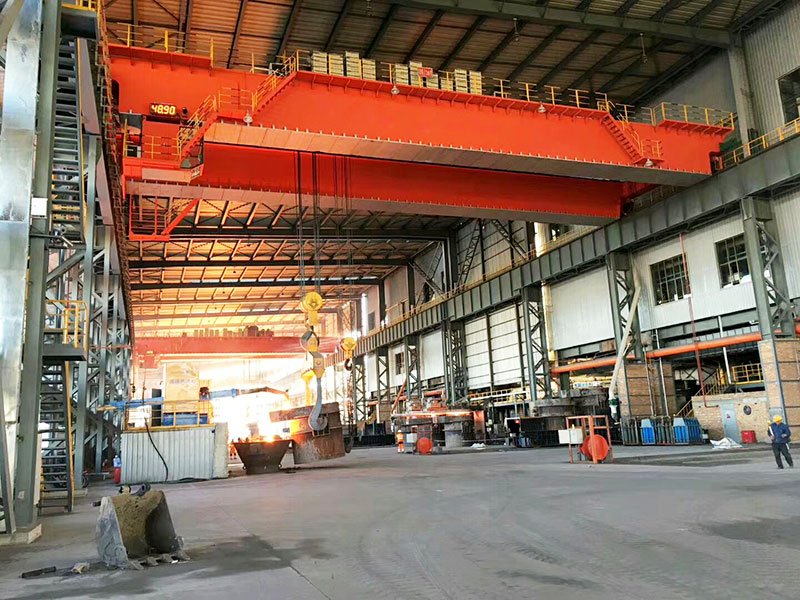
Why Molten Metal Handling Requires Specialized Safety Protocols
Unlike ordinary material handling cranes, ladle cranes operate under far more severe conditions. The crane not only carries extremely heavy loads but also transports hazardous liquid metal that can cause explosions or fires if spilled.
Several major risks make molten metal handling especially dangerous:
- Extremely high temperatures
- Dynamic load movement caused by liquid sloshing
- Continuous heavy-duty operation
- Harsh environmental conditions
- Structural fatigue from thermal stress
- Risk of hook or brake failure
- Human operational errors
A spilled ladle can destroy equipment, damage production lines, and endanger workers across the facility. Therefore, safety systems for ladle cranes are designed with multiple layers of protection and redundancy.
Structural Safety Design for 100-Ton Ladle Cranes
Heavy-Duty Double Girder Construction
Most 100-ton ladle cranes use a double girder overhead crane configuration because it provides:
- Higher structural rigidity
- Improved load distribution
- Better resistance to deformation
- Enhanced stability during molten metal transport
The girders are typically manufactured using high-strength steel plates with reinforced welding structures designed to withstand repeated heavy-duty lifting cycles.
Thermal Protection Measures
Molten metal radiates intense heat that can damage crane structures and electrical systems over time. To protect the crane:
- Heat-resistant steel plates are installed near high-temperature zones
- Thermal insulation barriers shield critical components
- Reflective heat shields reduce radiant heat exposure
- High-temperature-resistant cables and motors are used
These protective measures help prevent premature structural fatigue and electrical failures.
Anti-Deformation Engineering
Ladle cranes experience significant thermal expansion and contraction during operation. Engineers incorporate anti-deformation design features such as:
- Optimized girder camber
- Reinforced trolley frames
- Finite element structural analysis
- Fatigue-resistant welded joints
This ensures the crane maintains structural stability under continuous high-temperature loading conditions.
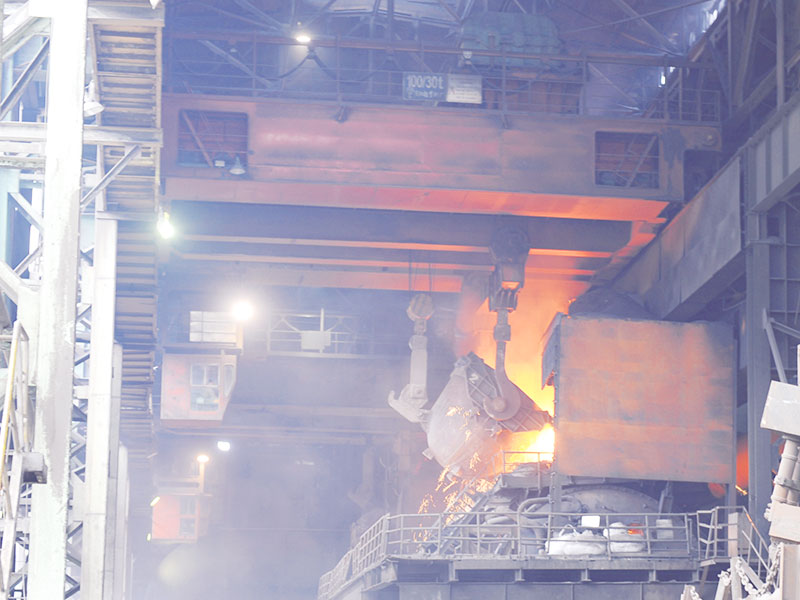
Redundant Hoisting Systems for Enhanced Safety
Dual Hoisting Mechanisms
One of the most important safety protocols for ladle cranes is the use of redundant hoisting systems.
A typical 100 ton overhead crane for ladle handling often includes:
- Main hoisting mechanism
- Auxiliary emergency braking system
- Independent motor drives
- Backup braking devices
If one component fails, the backup system can prevent the ladle from falling.
Dual Brake Configuration
Ladle cranes commonly use dual brake systems on the hoisting mechanism. These include:
- Primary working brake
- Secondary safety brake
The secondary brake automatically activates if the primary brake malfunctions.
This redundancy is critical because brake failure during molten metal transport can lead to catastrophic accidents.
Safety Factor Requirements
Compared with standard industrial cranes, ladle cranes are designed with higher safety factors for:
- Wire ropes
- Hooks
- Drums
- Bearings
- Structural components
These higher safety margins help ensure reliable operation under severe conditions.
Wire Rope and Hook Safety Protocols
Heat-Resistant Wire Ropes
Standard wire ropes cannot withstand prolonged exposure to high temperatures. Ladle cranes therefore use:
- Heat-resistant wire ropes
- Specialized lubrication systems
- Protective rope shielding
Routine inspection of wire ropes is mandatory because heat accelerates wear and fatigue.
Forged Heavy-Duty Hooks
The hook is one of the most critical safety components. Ladle crane hooks are typically:
- Forged from high-strength alloy steel
- Heat-treated for enhanced toughness
- Subjected to non-destructive testing
Hooks must be regularly inspected for:
- Cracks
- Deformation
- Excessive wear
- Opening enlargement
Any defective hook must be replaced immediately.
Hook Rotation Prevention
Molten metal loads must remain stable during transport. Many ladle cranes use anti-rotation hook designs to reduce ladle swinging and improve operational stability.
Advanced Control and Monitoring Systems
Real-Time Load Monitoring
Modern 100-ton ladle cranes are equipped with intelligent monitoring systems that track:
- Load weight
- Hoisting speed
- Trolley position
- Crane travel speed
- Motor temperature
- Brake status
Real-time monitoring allows operators to identify abnormal conditions before they become dangerous.
Overload Protection Systems
Overloading is a major risk factor in crane operations. Ladle cranes use automatic overload protection devices that:
- Detect excessive loads
- Prevent hoisting beyond rated capacity
- Trigger alarms
- Stop crane movement when necessary
This prevents structural overloading and mechanical failure.
Anti-Sway Control Technology
Molten metal movement inside the ladle can create dangerous swinging forces. Advanced anti-sway systems help:
- Reduce load oscillation
- Improve positioning accuracy
- Enhance operator control
- Increase transportation stability
This is especially important during long-distance travel inside steel plants.
Emergency Stop Systems
Emergency stop buttons must be accessible from:
- Operator cabins
- Ground control stations
- Maintenance platforms
Emergency stop systems immediately cut power and activate safety brakes when required.
Operator Safety Protocols
Specialized Operator Training
Operating a 100-ton ladle crane requires highly trained personnel. Operators must understand:
- Molten metal handling procedures
- Crane load characteristics
- Emergency response actions
- Safe travel paths
- Communication protocols
Training programs should include both theoretical instruction and practical simulation exercises.
Strict Pre-Operation Inspections
Before each shift, operators should inspect:
- Brake systems
- Wire ropes
- Hooks
- Limit switches
- Emergency controls
- Warning devices
Any abnormal condition must be reported and resolved before operation begins.
Safe Operating Speeds
Rapid crane movement can cause molten metal sloshing, increasing the risk of spills. Therefore:
- Hoisting speeds are carefully controlled
- Travel acceleration is minimized
- Sudden directional changes are avoided
Smooth operation is a key safety requirement.
Restricted Personnel Access
During molten metal transportation:
- Non-essential personnel must stay clear
- Restricted safety zones should be enforced
- Warning alarms and signal lights must remain active
This reduces injury risks in case of accidents.
Maintenance Safety Procedures
Preventive Maintenance Programs
Preventive maintenance is essential for ladle crane safety. Maintenance schedules should include:
- Daily inspections
- Weekly lubrication
- Monthly mechanical testing
- Quarterly structural evaluations
- Annual comprehensive overhauls
Regular maintenance reduces unexpected failures.
Non-Destructive Testing (NDT)
Critical structural components should undergo periodic NDT inspections such as:
- Ultrasonic testing
- Magnetic particle inspection
- Dye penetrant testing
These methods help detect hidden cracks or fatigue damage before failure occurs.
Brake Testing Procedures
Brake systems must be tested frequently under loaded conditions to verify:
- Braking force
- Response time
- Emergency stopping capability
Brake reliability is one of the most critical aspects of molten metal handling safety.
Electrical System Inspections
The harsh environment of steel plants can damage electrical systems through:
- Heat exposure
- Dust accumulation
- Vibration
- Humidity
Routine electrical inspections help prevent control failures and short circuits.
Emergency Response Planning
Spill Containment Procedures
Steel plants should establish clear molten metal spill response plans, including:
- Emergency evacuation routes
- Fire suppression systems
- Isolation procedures
- Communication protocols
Quick response can significantly reduce accident severity.
Backup Power Systems
Power loss during molten metal transportation can be extremely dangerous. Many ladle cranes use:
- Emergency backup power
- UPS control systems
- Auxiliary lowering systems
These features allow controlled crane operation during power interruptions.
Fire Protection Systems
Ladle crane operating zones often include:
- Automatic fire suppression systems
- Heat detection alarms
- Fire-resistant cable protection
- Emergency ventilation systems
These systems help control fires caused by molten metal accidents.
The Role of Automation in Ladle Crane Safety
Modern steel plants increasingly use automation to improve safety.
Remote Operation Technology
Remote-controlled ladle cranes allow operators to work from protected control rooms instead of high-temperature areas. Benefits include:
- Reduced human exposure to danger
- Improved visibility through camera systems
- Enhanced operational precision
Intelligent Fault Diagnosis
Advanced monitoring systems can automatically detect:
- Abnormal vibrations
- Brake wear
- Motor overheating
- Structural stress anomalies
Predictive maintenance technology helps prevent accidents before they occur.
Semi-Automated Crane Movement
Some steel plants now use semi-automated travel systems that optimize:
- Travel routes
- Speed control
- Positioning accuracy
Automation reduces human error and improves operational consistency.
Conclusion
Handling molten metal with a 100-ton ladle crane is one of the most demanding and hazardous lifting operations in heavy industry. Ensuring safety requires far more than simply using a heavy-duty steel mill crane – it demands a complete system of engineering safeguards, operational discipline, preventive maintenance, and emergency preparedness.
From reinforced structural design and redundant braking systems to advanced monitoring technology and operator training, every safety protocol plays a critical role in preventing accidents and protecting both personnel and equipment.
As steel plants continue moving toward smarter and more automated production systems, ladle crane safety technologies will become even more advanced. Intelligent diagnostics, remote operation, anti-sway systems, and predictive maintenance are helping modern facilities achieve higher safety standards while maintaining efficient molten metal transportation.
For steel manufacturers, investing in proper ladle crane safety protocols is not only essential for regulatory compliance but also critical for long-term operational reliability, workforce protection, and uninterrupted production efficiency.