
Boat handling is one of the most critical operations in marinas, shipyards, and boat maintenance facilities. Whether moving a small fishing vessel or a luxury yacht weighing hundreds of tons, safety is always the top priority. Marine travel lifts have become the preferred solution for lifting, transporting, and launching boats because they provide a controlled, efficient, and reliable method of handling vessels both in and out of the water.
Modern marine travel lifts combine advanced hydraulic systems, intelligent controls, robust structural engineering, and specialized lifting equipment to ensure that boats can be moved safely with minimal risk of damage. Understanding how these machines operate helps marina owners, shipyard managers, and vessel operators appreciate the engineering and safety measures behind every lifting operation.
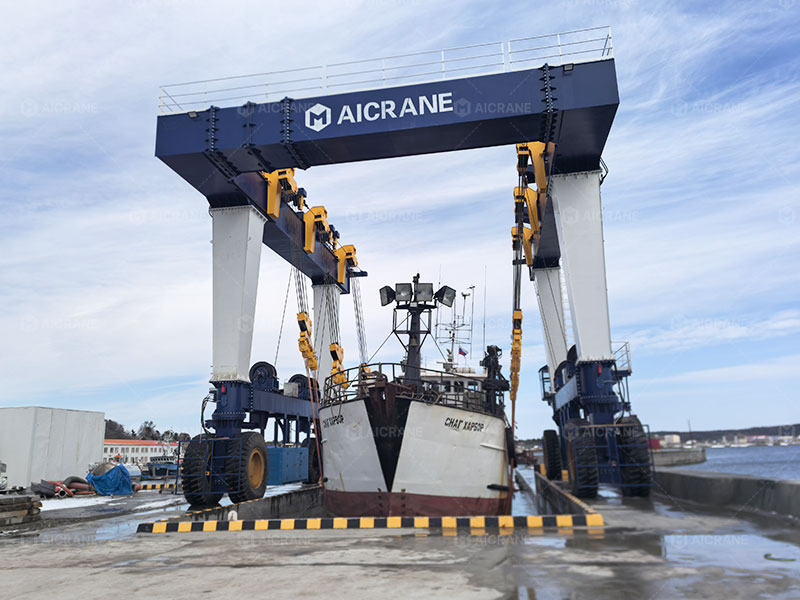
What Is a Marine Travel Lift?
A marine travel lift, also known as a boat travel lift or mobile boat hoist, is a mobile lifting machine designed specifically for handling boats and yachts. Unlike conventional cranes, travel lifts use adjustable lifting slings positioned beneath the hull to support the vessel evenly during lifting.
The machine typically consists of:
- A steel gantry structure
- Hydraulic lifting mechanisms
- Multiple wheel assemblies
- Steering systems
- Adjustable lifting slings
- Electrical control systems
- Safety monitoring devices
Travel lifts can range from 10-ton models for small recreational boats to 1000 ton travel lift systems used for superyachts, commercial vessels, and naval applications.
Step 1: Pre-Lift Inspection and Planning
Safe boat handling begins long before the vessel leaves the water.
Before every operation, operators conduct detailed inspections of both the travel lift and the boat being handled. This stage is essential because improper preparation is one of the most common causes of lifting incidents.
The inspection process typically includes:
Equipment Inspection
Operators check:
- Hydraulic systems
- Wire ropes or lifting mechanisms
- Lifting slings
- Tires and wheel assemblies
- Braking systems
- Steering systems
- Emergency stop functions
- Load monitoring devices
Any abnormalities must be corrected before operations begin.
Vessel Assessment
The vessel’s characteristics are carefully reviewed, including:
- Total weight
- Hull shape
- Length and beam dimensions
- Center of gravity
- Propeller and rudder locations
- Existing structural damage
This information helps determine proper sling placement and lifting procedures.
Lift Path Evaluation
The transport route is inspected to ensure:
- Adequate ground bearing capacity
- No obstructions
- Suitable turning space
- Safe travel conditions
A thorough risk assessment significantly reduces operational hazards.
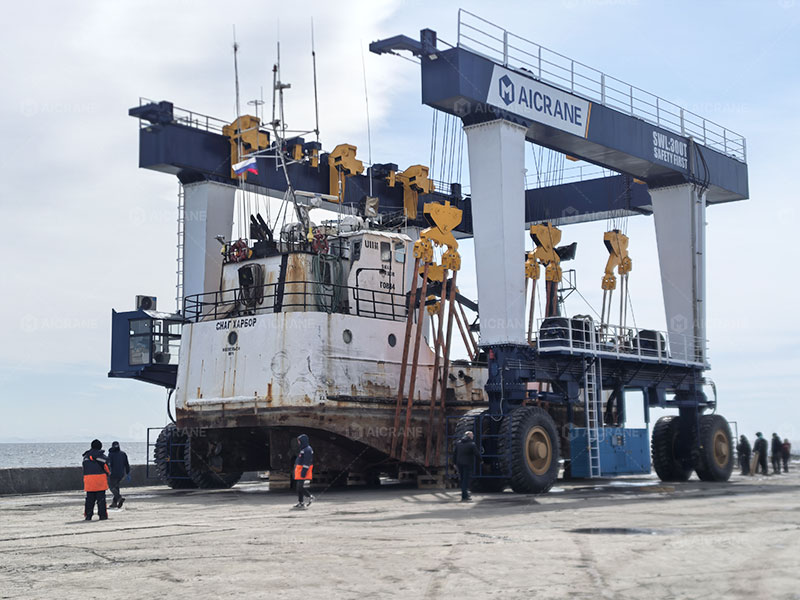
Step 2: Precise Sling Positioning
Once the travel lift is positioned over the vessel, lifting slings are lowered into the water and carefully placed beneath the hull.
This step is critical because incorrect sling placement can cause:
- Hull deformation
- Excessive stress concentration
- Vessel instability
- Damage to underwater components
Experienced operators use vessel drawings, manufacturer recommendations, and lift markings to determine the safest sling locations.
Special attention is given to avoiding:
- Propeller shafts
- Stabilizers
- Thrusters
- Sonar equipment
- Rudders
Many modern marinas maintain lifting records for frequently serviced vessels, allowing operators to repeat proven sling configurations.
Step 3: Controlled Boat Lifting
After sling placement is verified, the lifting process begins.
Marine travel lifts use synchronized hydraulic lifting systems to raise the vessel slowly and evenly.
Unlike conventional gantry cranes that lift from a single point, travel lifts distribute loads through multiple support locations. This significantly reduces structural stress on the boat.
During lifting, operators continuously monitor:
- Load distribution
- Sling tension
- Vessel alignment
- Hydraulic pressure
- Stability indicators
The boat is initially raised only a short distance above the water to perform a safety check.
At this stage, operators verify:
- Proper balance
- Secure sling positioning
- Absence of excessive hull movement
- No abnormal load readings
If any issue is detected, the vessel is lowered immediately for adjustment.
Only after confirming stable conditions does the lift continue.
Step 4: Load Balancing and Stability Control
Maintaining stability throughout the operation is one of the most important safety functions of a marine travel lift.
Several engineering features contribute to safe load control.
Wide Structural Design
Travel lifts feature wide spans and large wheelbases that create a stable support platform.
This reduces the likelihood of tipping even when handling large vessels.
Multi-Point Load Distribution
The lifting force is distributed through multiple slings, reducing concentrated stress.
This approach protects:
- Hull structures
- Internal framing
- Deck systems
Hydraulic Synchronization
Modern hydraulic systems ensure that all lifting points move simultaneously.
This prevents uneven lifting that could twist or distort the vessel.
Real-Time Load Monitoring
Advanced travel lifts incorporate load cells and electronic sensors that continuously measure weight distribution.
Operators receive immediate warnings if:
- Load imbalance occurs
- One sling experiences excessive tension
- Vessel alignment shifts unexpectedly
These technologies greatly improve operational safety.
Step 5: Transporting the Boat on Land
Once the boat reaches the required transport height, the travel lift begins moving toward the storage area, maintenance facility, or launching location.
Transporting a suspended vessel presents unique challenges.
To address these challenges, travel lifts utilize specialized mobility systems.
Multiple Wheel Configurations
Most marine travel lifts feature numerous wheels arranged across several wheel sets.
This design:
- Distributes ground pressure
- Protects pavement surfaces
- Improves stability
Advanced Steering Systems
Modern travel lifts may include:
- Front-wheel steering
- Four-wheel steering
- Crab steering
- Carousel steering
These steering modes allow precise maneuvering in confined shipyard spaces.
Controlled Travel Speed
Transport speeds remain relatively low to maintain stability.
Operators carefully manage acceleration, braking, and turning movements to minimize dynamic forces acting on the suspended load.
Ground Condition Monitoring
Safe transportation also depends on suitable ground conditions.
Shipyards often design dedicated travel lift lanes with reinforced surfaces capable of supporting heavy loads.
Proper infrastructure helps prevent settlement, rutting, and uneven load transfer.
Step 6: Positioning for Maintenance or Storage
Many boats are lifted for maintenance, repairs, inspections, or seasonal storage.
Once the vessel reaches its destination, precise positioning becomes essential.
The travel lift operator coordinates with ground personnel to align the boat with:
- Boat stands
- Storage cradles
- Maintenance supports
- Dry dock systems
Communication between team members is critical during this stage.
Spotters guide the operator to ensure accurate placement while maintaining safe clearances.
The boat is then lowered gradually onto the support system.
Load transfer occurs slowly to prevent sudden stress concentrations.
After the vessel is fully supported, sling tension is released and the travel lift is removed.
Step 7: Safe Boat Launching Procedures
Launching a vessel follows many of the same principles as lifting.
Before launch, operators verify:
- Sling placement
- Vessel readiness
- Launch path conditions
- Water depth requirements
The travel lift transports the boat to the launch area and positions it over the water.
The vessel is then lowered gradually until it begins floating.
At this point, operators confirm:
- Proper flotation
- Stable trim
- Absence of leaks
- Functional propulsion systems
Only after these checks are completed are the slings released.
The boat can then depart safely under its own power.
Key Safety Technologies in Modern Marine Travel Lifts
Today’s marine travel lifts incorporate numerous technologies designed to reduce risk and improve reliability.
These include:
Load Monitoring Systems
Continuous measurement of weight distribution helps prevent overload conditions.
Anti-Sway Control
Advanced hydraulic control reduces vessel movement during lifting and transport.
Emergency Stop Functions
Operators can immediately halt operations if hazards arise.
PLC-Based Control Systems
Programmable control systems improve lifting precision and operational consistency.
Remote Monitoring
Some modern travel lifts allow supervisors to monitor operational data in real time.
Predictive Maintenance Features
Sensors can detect component wear before failures occur, improving overall safety.
Best Practices for Safe Marine Travel Lift Operations
To maximize safety, operators should follow several industry best practices:
- Conduct pre-operation inspections before every lift.
- Follow manufacturer lifting guidelines.
- Use properly rated lifting slings.
- Verify vessel weight information.
- Train operators regularly.
- Monitor weather conditions carefully.
- Maintain clear communication among crew members.
- Follow established lifting procedures.
- Perform preventive maintenance on equipment.
- Document all lifting operations for future reference.
Consistent adherence to these practices significantly reduces operational risks.
Conclusion
Marine travel lifts play a vital role in modern marinas, boatyards, and shipbuilding facilities by providing a safe and efficient method of lifting, transporting, and launching vessels. Through careful planning, precise sling positioning, synchronized hydraulic lifting, advanced load monitoring, and controlled transportation systems, these machines are able to handle valuable boats with exceptional safety and reliability.
As vessel sizes continue to increase and marina operations become more demanding, modern marine travel lifts are evolving with smarter controls, improved safety technologies, and enhanced operational efficiency. For boat owners and marine facility operators alike, understanding how these systems work highlights why travel lifts remain one of the safest and most effective solutions for boat handling worldwide.