
Granite is capricious. One moment, you’re extracting blocks of formidable, crystalline rock. The next, you’re staring at a fragmented overburden that shifts with the whims of the quarry floor. Stationary crushing rigs fail here. They tether your operation to a single, often suboptimal, location. This immobility breeds inefficiency. When your project spans multiple benches or requires rapid redeployment across a sprawling site, a static plant becomes an anchor. The solution isn’t just portable; it’s aggressively kinetic. A mobile jaw crusher isn’t a luxury. It is the sine qua non for any serious granite operation where topography refuses to cooperate.
The Geological Gambit: Why Granite’s Anatomy Demands Tactical Agility
Granite possesses a heterogenous nature that most aggregates don’t. You aren’t crushing homogeneous limestone. You are fracturing a mosaic of quartz, feldspar, and biotite. Each seam possesses disparate compressive strengths. One vein might yield easily; the adjacent face might dull specialized steel in minutes. Stationary setups assume uniformity. This assumption burns capital.
Micro-fractures and the ‘Run of Quarry’ Debris
Blasting rarely produces uniform feed. You get run-of-quarry (ROQ) material that varies wildly in morphology. Angular, stressed blocks intermingle with rounded, decayed remnants. A mobile jaw crusher travels directly to this heterogenous pile. It doesn’t wait for loaders to haul material over long distances. It chews through the variable feed right at the muck pile. This proximity reduces the segregation of fines from coarse material. Segregation ruins efficiency; mobility preserves the blend.
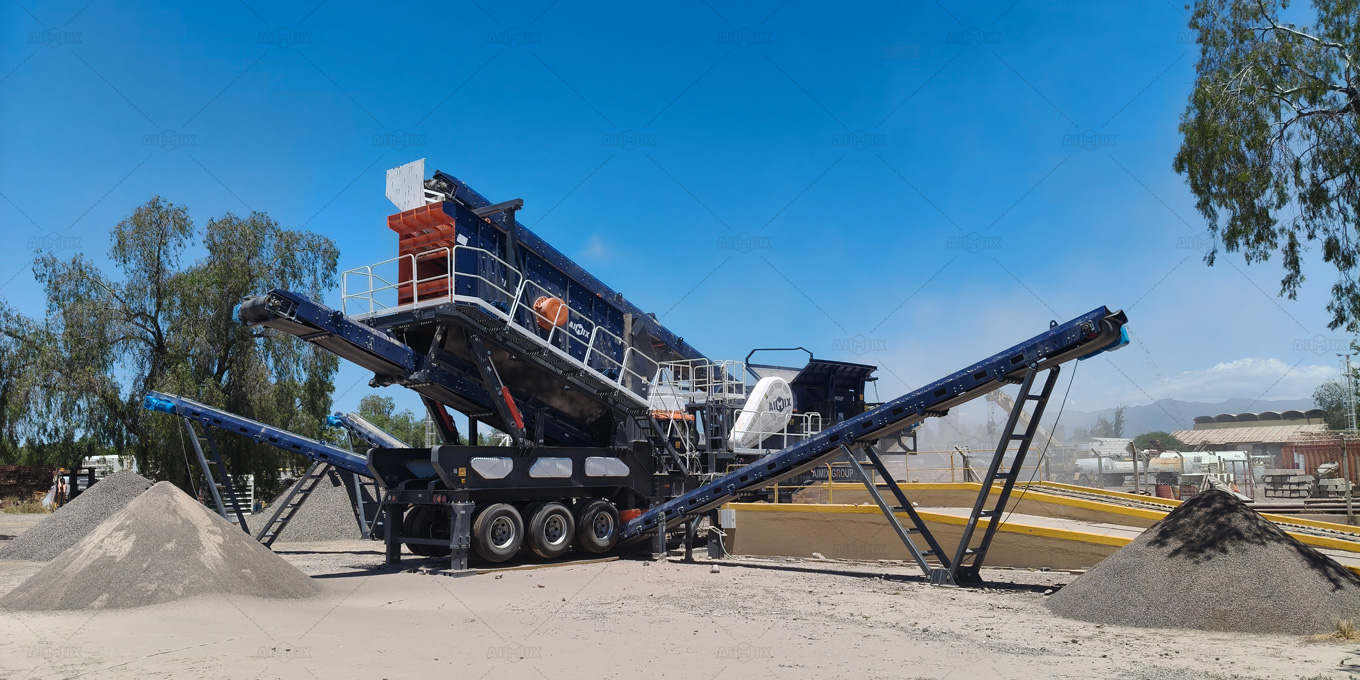
Beachheading the Next Bench
Quarries advance. Benches progress downward and outward. Dragging conveyors and relocating a primary crusher is a week-long ordeal. A track-mounted jaw cruiser repositions in hours. When the granite face retreats forty meters, your primary crushing zone follows suit. This eliminates costly haulage loops. Less rubber on the access road. Less diesel burned by articulated dump trucks. The mobile jaw becomes the fulcrum of the extraction process, not a distant, static waypoint.
Capital Expenditure Versus Kinetic Utility: Crushing the Logistics Bottleneck
Procurement officers often fixate on throughput per hour. This is myopia. The true metric is throughput per unit of logistics. A stationary complex might process 500 tons per hour, but if trucks travel 2 kilometers each way, your effective cycle time doubles. You lose density of action. A mobile jaw crusher, positioned directly at the working face, slashes that cycle to nothing. The excavator loads; the granite crusher machine reduces; the stacker or conveyor moves the product.
Exorcising the Haul Truck Albatross
Haul trucks are necessary evils. They compact subgrades, generate dust, and demand wide berms. In deep pits, ramp cycles become punitive. A mobile jaw eliminates the primary haul. You deposit blasted granite directly into the feeder. No intermediate stockpile. No rehandle. This is lean production applied to plutonic rock. The reduction in tire wear and articulated chassis stress alone often justifies the mobile unit’s premium price. You aren’t buying a crusher. You are buying the negation of transit.
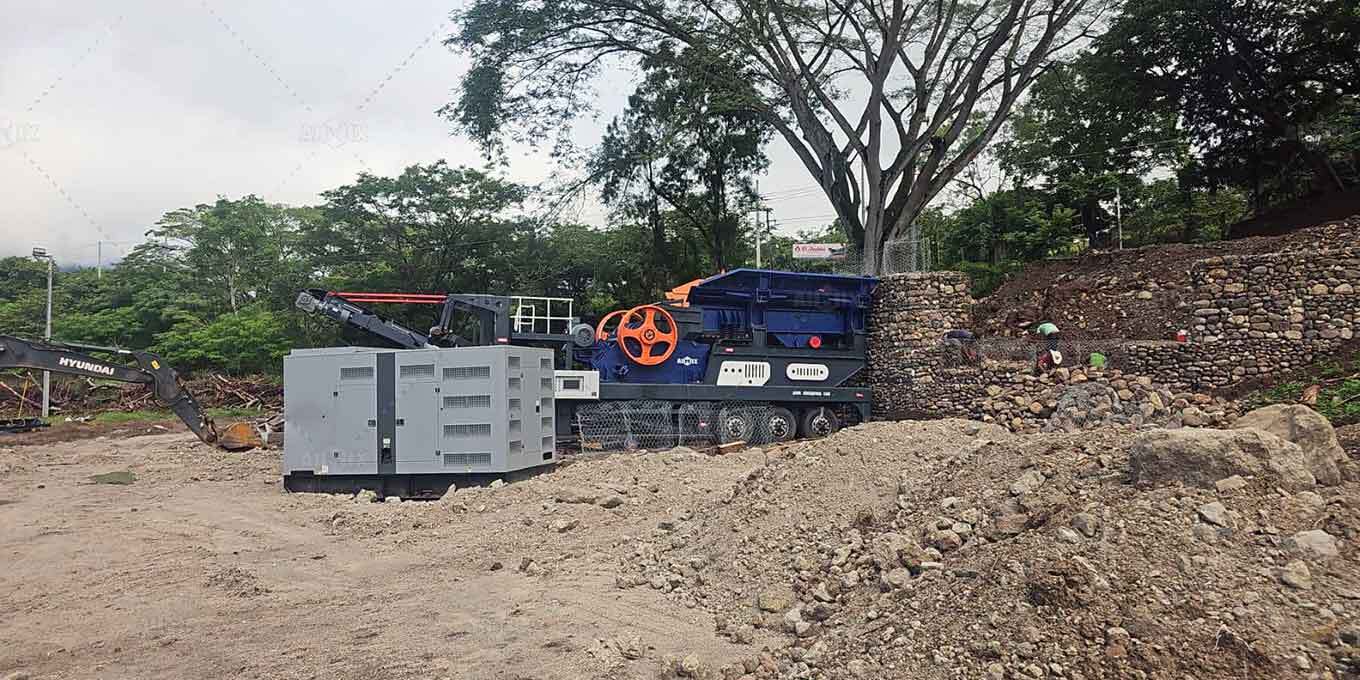
Just-in-Time Crushing for Shotrock
Consider the concept of shotrock volatility. Immediately after a blast, the material is at its most fractured and workable. Waiting allows natural interlocking to resettle. A mobile jaw moves in before the muck pile consolidates. This proactive stance leverages the rock’s temporary weakness. You crush it while it still remembers the explosive shock. Stationary plants lose this window. They wait for the loaders to trickle feed the stockpile. The mobile operator seizes the ephemeral advantage of fresh fragmentation.
Substrate Specificity and the Eccentric Shaft Advantage
Not all jaw crushers handle granite’s abrasiveness equally. A mobile plant must mount a crusher that tolerates silicate aggression. The heart of this resilience is the eccentric shaft and the toggle plate geometry. Mobile crushers engineered for granite use high-stroke, low-rotational-speed eccentric drives. This generates immense compressive force sufficient to rupture quartz crystals without generating excessive slivers or acicular particles.
Closed Side Setting (CSS) Adaptability On-the-Fly
Granite changes. A wet seam might introduce clay-like saprolite. A dry face might produce brittle, sharp flakes. A mobile jaw allows hydraulic CSS adjustment in real-time. The operator tightens the setting to produce a 50mm minus product or loosens it to flush out cohesive fines. This adaptability is impossible with a rigid, shim-adjusted stationary jaw. You need that hydraulic over-ride to manage the unpredictable schiller effect of the feldspar. Without it, you produce either too much sand or too many oversize slabs. Mobility provides the interface for immediate specification changes.
Energy Recapture Through Direct Drive Systems
Modern mobile rigs eschew complex belt drives for direct diesel-electric or hydraulic drive trains. This reduces parasitic energy loss. The inertia of the flywheel is optimized for granite’s peak compressive load. When the jaw encounters a particularly recalcitrant block, the flywheel releases stored kinetic energy to push through the fracture point. Then, the drivetrain recovers. This avoids the thermal spikes that kill stationary electric motors. The mobile stone crusher plant machine breathes with the rock. It doesn’t fight it. This synergy—variable load, variable torque—is only achievable in a self-contained, mobile architecture. Stationary plants demand constant feed. Mobile jaws thrive on chaos.
Ultimately, granite extraction is a war of attrition against an unforgiving medium. The general who commands the mobile, aggressive army wins. The one who digs trenches around a stationary fortress loses the quarry. Deploy the mobile jaw. Redeploy it tomorrow. Let the granite dictate the schedule, not the crusher’s foundation.