
Rubber Tyred Gantry (RTG) cranes are essential tools for container handling, heavy industrial lifting, and yard operations. Among various power options available, diesel-powered RTG cranes stand out for their mobility, operational flexibility, and reliability in challenging environments. Understanding the advantages of diesel propulsion is crucial for industries seeking efficient, cost-effective, and high-performance crane solutions.
1. Enhanced Mobility in Industrial Yards
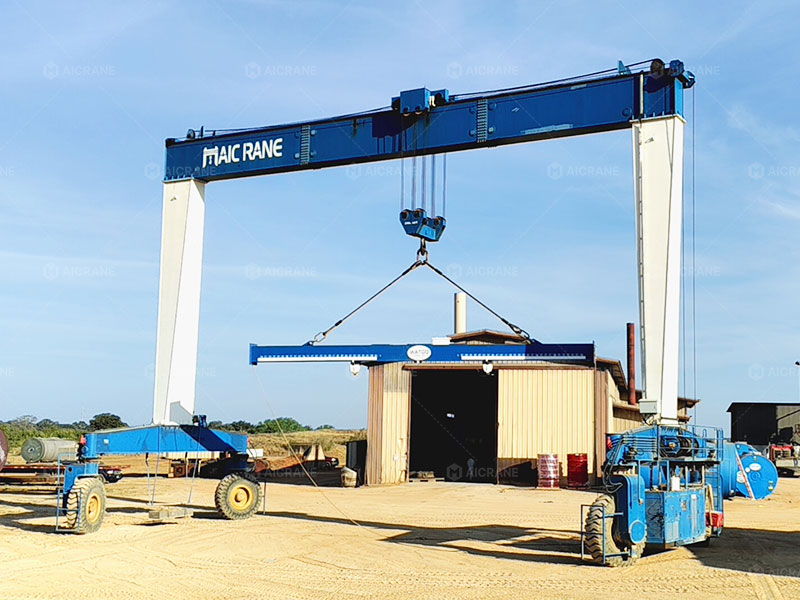
One of the most significant advantages of diesel-powered RTG rubber tyred gantry cranes is their unmatched mobility. Unlike rail-mounted gantry cranes, RTG cranes move freely across industrial yards, container depots, and storage areas. Diesel engines provide high torque and power, allowing cranes to traverse uneven surfaces, ramps, and soft ground without sacrificing stability or speed. This mobility is essential in large ports or industrial facilities where cranes must cover significant distances between container stacks or workstations.
Diesel-powered RTG cranes are particularly effective in areas where electrical infrastructure is limited or unavailable. Unlike electric RTG cranes, which require a continuous power supply via busbars or cable reels, diesel RTGs operate independently, making them ideal for temporary yards, construction sites, and remote locations.
2. High Power Output for Heavy Lifting
RTG cranes are tasked with lifting extremely heavy containers, often exceeding 40 tons per load. Diesel engines provide substantial horsepower, enabling these cranes to lift, transport, and position loads efficiently. The high torque characteristic of diesel engines ensures smooth operation even under maximum load conditions.
This high-power output directly supports mobility under load, which is critical for maintaining efficiency and safety. Diesel-powered RTG cranes can move loaded containers across the yard without significant reduction in speed or performance, unlike some electric alternatives that may experience limitations on non-powered tracks.
3. Flexibility and Operational Independence
One of the key advantages of diesel propulsion is operational flexibility. Diesel RTG cranes do not rely on fixed power sources, allowing operators to reconfigure yard layouts without worrying about relocating electrical connections. This independence is particularly beneficial in container yards with dynamic storage requirements or industrial sites where the layout frequently changes.
Additionally, diesel-powered cranes are not limited by track length or energy supply constraints, making them suitable for a wide range of applications, including temporary storage, port expansion projects, and heavy equipment handling in industrial plants.
4. All-Weather Performance
Diesel-powered RTG cranes are designed to perform in all weather conditions. Unlike electric gantry cranes, which can face operational challenges in extremely cold or wet environments, diesel engines are robust and can maintain mobility across rain-soaked, muddy, or icy surfaces. The high torque output of diesel engines allows cranes to maintain stability and traction, even on uneven terrain.
This feature is particularly advantageous in ports and industrial yards located in regions with harsh climates. Diesel-powered RTG cranes ensure that operations continue smoothly without delays caused by environmental factors.
5. Cost Efficiency and Fuel Flexibility
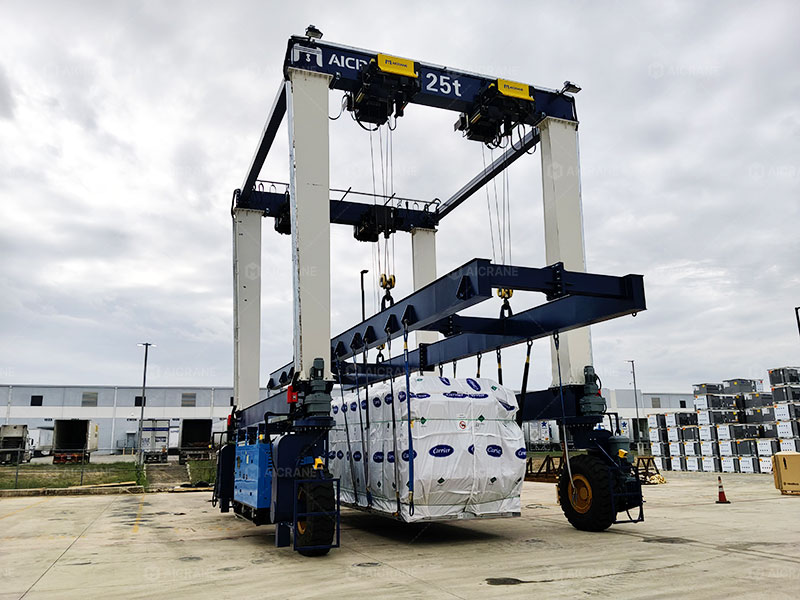
While diesel fuel may be perceived as more expensive than electricity in some regions, diesel-powered RTG cranes offer cost efficiency in terms of infrastructure and operational flexibility. Electric RTG cranes require extensive installation of busbars, power lines, or cable reels, which increases initial setup costs and limits mobility. Diesel RTGs eliminate this dependency, reducing infrastructure expenses and allowing operators to deploy cranes wherever they are needed without additional power setup costs.
Moreover, diesel engines can operate on various fuel types, including biodiesel blends, offering fuel flexibility and aligning with environmental goals in some industrial operations.
6. High Reliability and Durability
Diesel-powered RTG cranes are renowned for their durability and reliability. Diesel engines are built to withstand continuous heavy-duty operation, making them ideal for high-frequency lifting tasks in ports and industrial yards. Regular maintenance ensures long-term reliability, and the engine’s robust design allows it to handle heavy loads and constant mobility without frequent breakdowns.
The durability of diesel engines also translates into long operational lifespans, reducing the need for replacement and minimizing downtime. This reliability is a key consideration for operators aiming for uninterrupted productivity in container handling and industrial logistics.
7. Enhanced Maneuverability and Mobility Features
Diesel-powered RTG cranes complement advanced mobility and steering technologies. Features such as straight travel, crab steering, 90° transverse steering, and pivot steering are fully supported by diesel propulsion. The engine provides sufficient torque and control to execute precise lateral movements, rotate containers accurately, and navigate tight spaces efficiently.
High mobility is particularly important when moving multiple wheeled gantry cranes in close proximity or when working in congested yards. Diesel power ensures consistent responsiveness, allowing operators to maintain precision even under heavy load conditions.
8. Integration with Hybrid Technologies
Modern diesel-powered RTG cranes often incorporate hybrid technologies, combining diesel engines with electric motors to optimize fuel efficiency and reduce emissions. These hybrid systems use diesel engines for high-power tasks while relying on electric power for low-speed movements or idling, resulting in reduced fuel consumption and lower operating costs.
This combination enhances both mobility and environmental performance, making diesel-powered RTG cranes competitive with fully electric alternatives in terms of sustainability.
9. Safety and Control
Diesel-powered RTG cranes support advanced control systems that enhance mobility safety. Features such as anti-collision sensors, load weight monitoring, and stability systems are powered effectively by the diesel engine, ensuring that cranes move safely even in fully loaded conditions. High engine torque ensures smooth acceleration and deceleration, reducing the risk of sudden jerks that could compromise safety or load integrity.
10. Operational Scalability
Diesel RTG cranes are easily scalable to meet different industrial and port requirements. From medium-sized yards handling 20–40-ton containers to large container terminals managing 50–60 ton loads, diesel-powered cranes can be configured with varying spans, lifting capacities, and mobility features. This scalability allows operators to select the optimal crane configuration without compromising mobility or performance.
Conclusion
Diesel-powered RTG rubber tyred gantry cranes offer unmatched mobility, flexibility, and reliability in industrial and port operations. Their high torque and power enable heavy lifting while maintaining smooth transit across challenging terrains. With operational independence, all-weather performance, fuel flexibility, and advanced mobility features, diesel-powered RTGs are ideal for facilities that require dynamic layouts, continuous operations, and high-efficiency container handling.
While electric and hybrid RTG cranes are gaining popularity due to environmental considerations, diesel-powered RTGs remain a trusted choice for industrial yards worldwide, particularly where mobility, high performance, and operational flexibility are paramount. For operators seeking mobile gantry cranes that can adapt to varying yard layouts, handle heavy loads reliably, and maintain operational continuity under all conditions, diesel-powered RTG cranes are a superior solution.