
Road construction across Central America and the Andes Mountains is shaped by steep terrain, fragmented project locations, limited infrastructure, and tight construction schedules. In these conditions, contractors cannot rely only on traditional fixed installations. The mobile asphalt plant has emerged as a practical solution that combines flexibility, speed of deployment, and controlled production quality. From coastal highways to high-altitude mountain roads, the mini asphalt plant format is redefining how regional contractors evaluate productivity, mobility, and long-term investment value.
Regional Construction Challenges in Central America and the Andes
Complex Geography and Fragmented Job Sites
The geography of Central America and the Andean corridor creates significant logistical obstacles for road builders. Projects are often scattered across valleys, mountain passes, and isolated communities. Transporting hot mix asphalt over long distances leads to temperature loss, material segregation, and rising rejection rates. A mobile asphalt plant(planta de asfalto móvil) located close to the paving front eliminates these risks by producing fresh mix at the point of use.
Unstable Infrastructure and Seasonal Constraints
Many regions still lack reliable power grids, wide access roads, or permanent industrial land. During rainy seasons, temporary roads become impassable, delaying the delivery of materials from distant batching facilities. By deploying a compact mini asphalt plant near the project corridor, contractors significantly reduce their dependency on unreliable infrastructure.
High Altitude and Climate Variability
The Andes Mountains expose equipment to rapid temperature changes, low oxygen density, and strong wind loads. Fixed installations are costly to construct and maintain in such environments. Mobile units, engineered with modular frames and reinforced enclosures, adapt more easily to these demanding conditions and can be relocated when climate or project conditions change.
Operational Advantages of Mobile Asphalt Plants
Rapid Mobilization and Demobilization
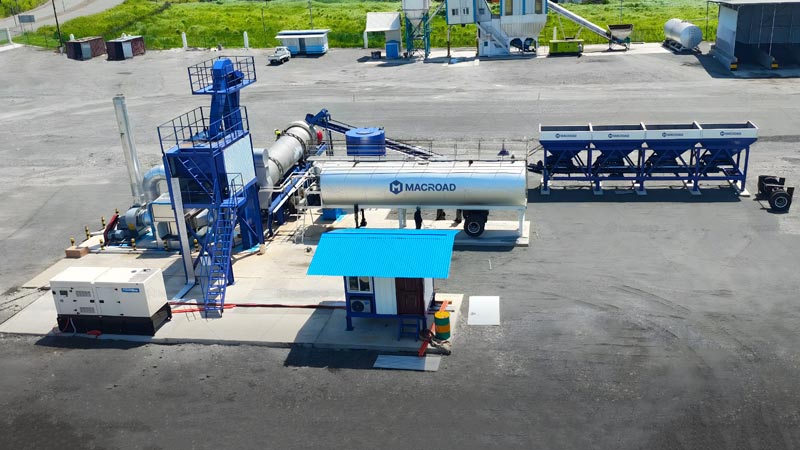
A mobile asphalt plant can typically be installed and commissioned within days rather than months. This allows contractors to move from one project to another without heavy dismantling or civil foundation work. For governments working on multiple rural road sections simultaneously, this flexibility creates a decisive scheduling advantage.
Reduced Transportation Costs
Fuel expenses and trucking fleets represent a major portion of asphalt production budgets. When the production source is far from the paving site, material transport costs rise sharply. By placing a mini asphalt plant(mini planta de asfalto) directly on or near the job site, contractors cut haulage distance, minimize fuel waste, and reduce equipment wear.
Consistent Mix Quality at the Paving Front
Shorter material transport routes mean stable asphalt temperature upon arrival at the paver. This improves compaction performance and surface finish quality, especially on mountain slopes where temperature loss is a chronic problem for conventional supply chains.
Economic Considerations for Latin American Contractors
Lower Entry Barrier Compared with Fixed Plants
Many small and mid-sized contractors are discouraged by the high upfront investment of traditional stationary plants. The price of asphalt plant(precio de planta de asfalto) solutions in mobile format is typically lower due to simplified foundations, modular transport frames, and shorter installation cycles. This enables regional companies to enter the asphalt production market without excessive financial risk.
Improved Cash Flow Management
Because mobile plants can be moved rapidly between projects, asset utilization rates are higher. Instead of sitting idle after project completion, equipment can be redeployed to new sites, ensuring steady revenue generation and faster return on investment.
Lower Lifecycle Operating Costs
Modern mobile asphalt plant systems integrate energy-efficient burners, optimized drying drums, and automated control platforms. These features reduce fuel consumption, maintenance frequency, and operator error, making the total cost of ownership more predictable over time.
Technology Features that Support Mountain and Remote Projects
Integrated Power Generation Modules
In regions with unstable or nonexistent grid access, mobile plants equipped with diesel generator sets maintain continuous production without dependency on external power supply. This capability is particularly valuable in high-altitude Andes corridors.
Modular Control Systems
Touchscreen PLC platforms allow operators to adjust formulas, temperatures, and production volumes with minimal training. Remote diagnostics also enable technical teams to provide support even when the plant is operating hundreds of kilometers from the nearest service center.
Compact Transportation Design
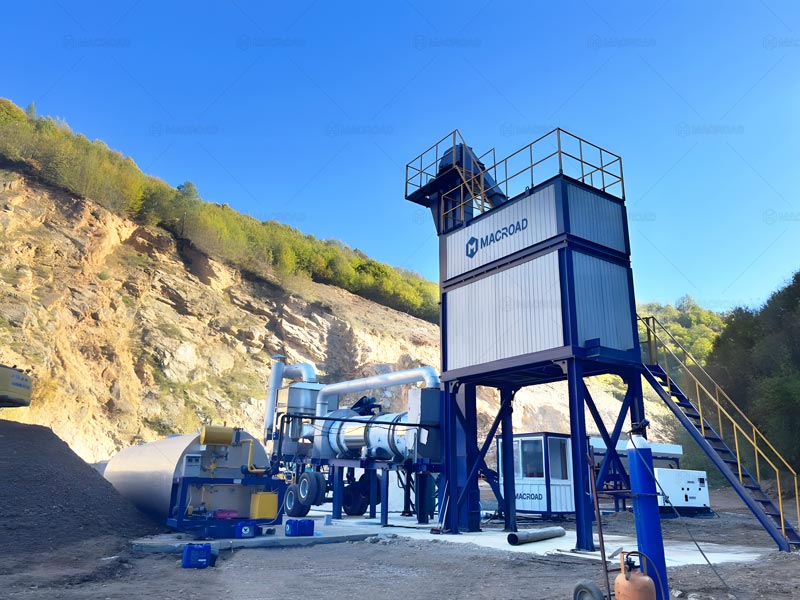
Trailer-mounted frames and foldable structures allow mini asphalt plant units to pass through narrow mountain roads, tunnels, and rural bridges that would be inaccessible to traditional plant modules.
Case Perspective from Northern South America
Why Asphalt Plant Colombia Projects Favor Mobile Solutions
Colombia’s road construction market illustrates the strategic value of mobile technology. Mountain highways, inter-departmental corridors, and post-conflict infrastructure programs require equipment that can be deployed rapidly to isolated regions. An asphalt plant Colombia(planta de asfalto Colombia) contractor operating mobile systems gains a competitive advantage by responding faster to tender awards and maintaining consistent production quality under difficult terrain conditions.
Furthermore, government projects increasingly emphasize environmental protection and reduced carbon footprint. By minimizing long-distance transport, mobile plants lower overall emissions and reduce road congestion in sensitive ecological zones.
Comparison with Traditional Fixed Installations
Infrastructure Dependency
Fixed installations require permanent foundations, stable power access, and large land parcels. In Central America and the Andes, such conditions are often unavailable or prohibitively expensive. Mobile alternatives eliminate these constraints.
Project Cycle Alignment
Many road programs in the region are short-cycle or segmented. Investing in a permanent facility for projects lasting only several months is rarely justified. Mobile solutions align better with the fragmented nature of regional infrastructure development.
Strategic Value for Growing Contractors
Scalability and Expansion Potential
Contractors can begin operations with a mini asphalt plant and later expand capacity by adding modules or upgrading burners and control systems. This scalable investment approach reduces financial pressure and supports sustainable business growth.
Stronger Market Positioning
Owning a mobile asphalt plant enhances bidding competitiveness. Clients value suppliers who can guarantee stable supply regardless of location, terrain, or infrastructure constraints.
Conclusion
In Central America and the Andes Mountains, road construction success depends on flexibility, mobility, and cost control. The mobile asphalt plant addresses these requirements more effectively than traditional fixed installations. With lower investment thresholds, reduced logistics complexity, and the ability to deliver consistent quality under extreme geographic conditions, mobile technology is not simply a trend but a strategic necessity for regional contractors aiming to secure long-term growth and market leadership.