
Confined space multi sites projects, such as urban village renovation, small-scale municipal road maintenance, and indoor decoration engineering, have the characteristics of narrow construction space, frequent site transfer, and scattered concrete demand. Choosing suitable concrete pump solutions is crucial to ensuring construction efficiency, safety, and quality. In such projects, traditional large-scale concrete equipment is often difficult to apply due to space and mobility restrictions, making small concrete pump and portable concrete mixer and pump the preferred equipment types. For project managers and procurement personnel, mastering scientific selection tips can help them accurately lock in the most suitable solutions, avoid unnecessary costs and construction delays. This article will elaborate on the key tips for obtaining suitable concrete pump solutions for confined space multi sites projects, providing practical guidance for relevant practitioners.
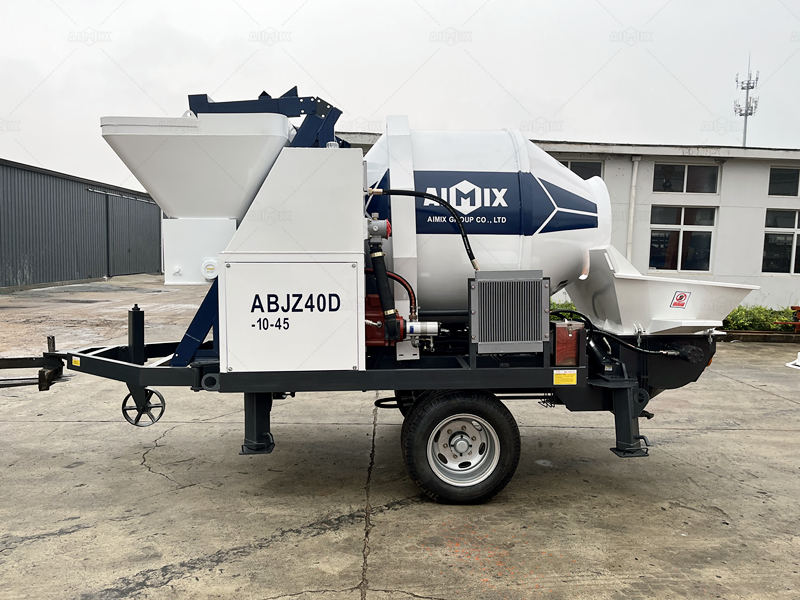
Conduct In-Depth Demand Analysis: Lay the Foundation for Suitable Solutions
The premise of obtaining suitable concrete pump solutions is to conduct in-depth analysis of the project’s actual needs, which directly determines the direction of solution selection. First, it is necessary to clarify the specific characteristics of confined spaces. Different confined spaces (such as narrow alleyways, indoor floors, and underground garages) have different restrictions on equipment size, height, and entry channels. For example, in alleyways with a width of less than 3 meters, the equipment’s overall width must be strictly controlled; in indoor projects with a floor height of less than 2.8 meters, the height of the equipment’s working parts (such as booms) must be considered. It is recommended to measure the key dimensions of each construction site in advance and list the space restrictions in detail to provide a basis for equipment type selection.
Secondly, sort out the requirements of multi-site transfer. The frequency of transfer between different sites, the distance of transfer, and the condition of transfer routes (such as road slope, bearing capacity, and whether there are obstacles) are important factors affecting the selection of concrete pump solutions. If the transfer distance between sites is short (within 5 kilometers) and the road is relatively flat, a portable concrete mixer and pump with self-walking function can be selected to improve transfer efficiency; if the transfer route has steep slopes or uneven roads, it is necessary to choose equipment with strong off-road performance. At the same time, the loading and unloading conditions of the equipment should also be considered. For sites that are difficult to enter by large transport vehicles, the equipment should be easy to disassemble and assemble or have a small overall weight to facilitate manual or small-scale mechanical handling.
Finally, clarify the concrete demand parameters. The hourly concrete demand, concrete type (such as ordinary concrete, high-strength concrete), and slump requirements of the project determine the performance parameters of the concrete pump. For confined space multi sites projects with small single-site concrete demand (less than 10 cubic meters per hour), a small concrete pump with moderate pumping capacity can meet the needs; if the project requires both concrete mixing and pumping, it is more appropriate to choose a concrete mixer with pump for sale, which integrates mixing and pumping functions, reduces the number of equipment and saves space. In addition, the pumping height and horizontal distance of each site should be measured to ensure that the selected equipment’s performance can meet the construction requirements.
Prioritize Equipment Compactness and Portability: Core of Confined Space Multi Sites Adaptation
For confined space multi sites projects, the compactness and portability of equipment are the core indicators of concrete pump solutions. When selecting equipment, priority should be given to small concrete pump and portable concrete mixer and pump, which have inherent advantages in adapting to narrow spaces and frequent transfers. First, pay attention to the overall size and weight of the equipment. The length, width, and height of the equipment should be as small as possible under the premise of meeting performance requirements. For example, the overall width of a suitable small concrete pump should be controlled within 1.8 meters, and the weight should not exceed 5 tons, so that it can easily pass through narrow alleyways and be loaded and unloaded by ordinary small trucks.
Secondly, focus on the mobility and flexibility of the equipment. Portable concrete mixer and pump are usually equipped with tire-type chassis or crawler-type chassis, which have good mobility. Tire-type chassis is suitable for flat road transfer, with fast transfer speed; crawler-type chassis has strong off-road performance, suitable for complex terrain such as construction sites with uneven ground. Some advanced models are also equipped with hydraulic folding mechanisms, which can fold the boom and other protruding parts during transfer, further reducing the overall volume of the equipment and improving the convenience of transfer. In addition, the equipment’s turning radius should be small to facilitate operation in narrow spaces.
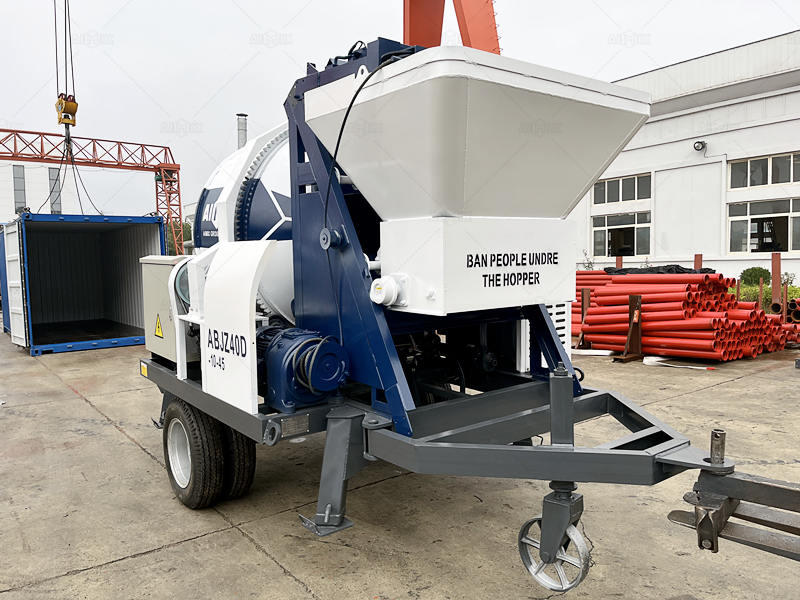
It should be noted that while pursuing compactness and portability, the reliability and durability of the equipment should not be ignored. Confined space construction often has poor operating conditions, and the equipment is prone to wear and failure. Therefore, when selecting concrete mixer with pump for sale or small concrete pump, it is necessary to choose products with reliable quality, wear-resistant components, and stable performance. It is recommended to check the brand reputation, product quality certification, and user reviews of the equipment to ensure that the equipment can adapt to the long-term operation needs of multi-site projects.
Customize Solutions According to Site Characteristics: Improve Adaptability
Due to the differences in the characteristics of each site in confined space multi sites projects, a one-size-fits-all concrete pump solution is often difficult to meet the actual needs. It is necessary to customize the solution according to the specific characteristics of each site. First, for indoor confined spaces (such as shopping mall renovation, basement construction), the key is to solve the problems of equipment entry and noise control. If the equipment cannot enter through the main entrance, it can be disassembled into modules for on-site assembly; for noise-sensitive areas, it is necessary to choose equipment with low noise or install noise reduction devices. At the same time, the exhaust gas emission of the equipment should be considered, and electric or clean energy-powered small concrete pump can be selected for indoor projects to avoid air pollution.
Secondly, for outdoor confined spaces (such as narrow urban roads, old community renovation), the focus is on equipment mobility and traffic coordination. When selecting portable concrete mixer and pump, it is necessary to ensure that the equipment meets the local traffic management requirements and can be quickly transferred between different road sections. In addition, the layout of the equipment on the site should be optimized to minimize the occupation of road space and avoid affecting the normal passage of pedestrians and vehicles. For example, the equipment can be placed at the intersection of two narrow roads, and the conveying pipeline can be laid along the edge of the road to improve space utilization.
Thirdly, for multi-site projects with special concrete requirements, the solution should be customized according to the concrete performance. For example, if the project requires high-strength concrete, the selected concrete pump should have