
Mobile boat hoists, also known as boat travel lifts or mobile boat cranes, are indispensable tools in modern marinas and shipyards. Designed to lift, transport, and place boats of various sizes safely and efficiently, these machines provide a level of versatility and operational efficiency that traditional fixed cranes cannot match. In this article, we explore the practical applications of mobile boat hoists, highlighting their significance in marinas and shipyards, their operational advantages, and the value they bring to boat owners, operators, and service providers.
1. Efficient Lifting and Launching of Boats
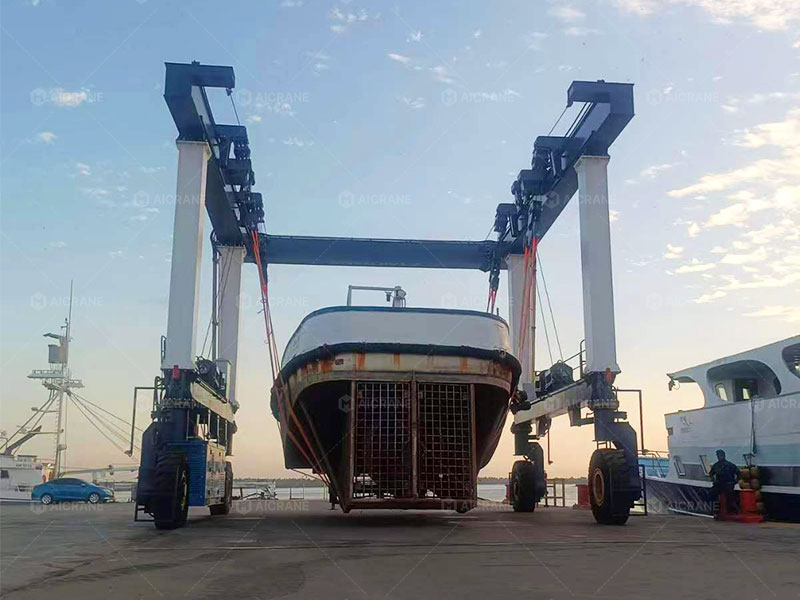
One of the primary applications of mobile boat hoists in marinas is the lifting and launching of vessels. Boats vary widely in size, from small recreational yachts to large commercial fishing boats. Mobile boat hoists are designed to handle these varying loads safely. With adjustable slings and customizable lifting capacities, operators can lift boats out of the water for maintenance, transport, or storage without damaging the hull or deck.
Unlike fixed gantry cranes, mobile boat hoists can maneuver across docks and uneven surfaces, making them ideal for marinas where space is limited or boats are positioned in tight locations. Their ability to position precisely over the water allows for rapid launch and retrieval, reducing downtime and improving marina efficiency.
2. Dry Docking and Storage Operations
Dry docking is a critical part of vessel maintenance. Mobile boat hoists allow shipyard personnel to lift boats out of the water and place them onto trailers, cradles, or designated storage areas. This capability is essential for winter storage, seasonal maintenance, or long-term storage in marinas with limited water space.
By facilitating quick and safe transfer from water to land, mobile hoists or travel lifts reduce labor costs and minimize risks associated with manual handling. Additionally, their mobility enables them to serve multiple docks and storage areas, unlike stationary cranes which are limited to a single location.
3. Maintenance and Repair Applications
Shipyards and marinas rely on mobile boat hoists for a wide range of maintenance and repair tasks. Lifting a vessel out of the water allows technicians to inspect the hull, propellers, rudders, and other critical components. Mobile hoists provide stable and adjustable lifting solutions that prevent structural stress or damage to the boat during maintenance.
These hoists are especially valuable for tasks such as painting, hull cleaning, or engine replacement. By providing easy access to the underside of the boat, they enable precise work in a safe and controlled manner. Moreover, their mobility ensures that vessels can be moved between workstations or maintenance bays without the need for multiple lifting systems.
4. Transporting Boats Within the Facility
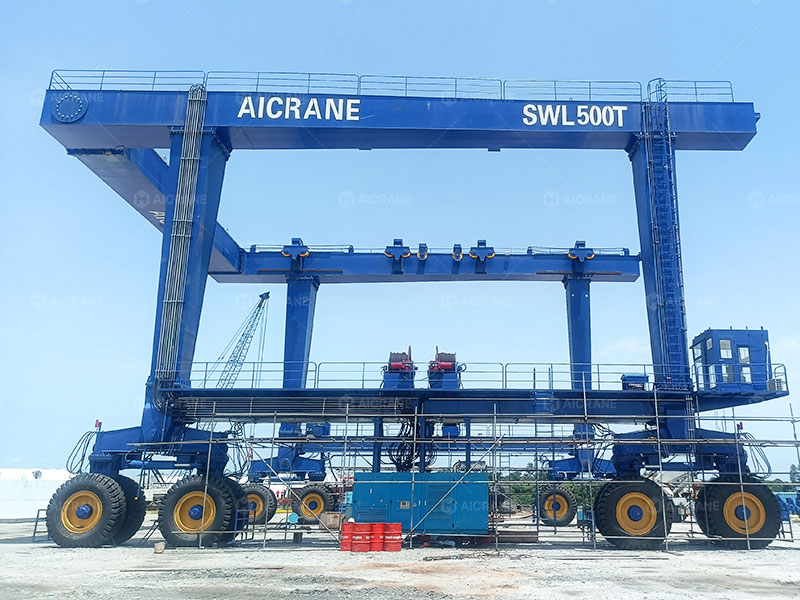
Beyond lifting and launching, mobile boat hoists excel in transporting boats across marinas and shipyards. Unlike traditional shipyard cranes, which are fixed in one location, mobile hoists can navigate tight corners, ramps, and narrow pathways. This makes it possible to move boats from one dock to another or reposition them within storage areas efficiently.
For shipyards managing multiple vessels simultaneously, this flexibility is crucial. Operators can optimize space utilization by rearranging boats as needed, supporting operational workflows without interrupting other ongoing activities. The ability to transport boats safely over short distances also reduces the risk of collisions or damage compared to towing with watercraft or trailers.
5. Handling Large and Heavy Vessels
Some mobile boat hoists are designed to lift extremely large and heavy vessels, including superyachts and commercial fishing boats. Their robust frames, hydraulic lifting systems, and high-capacity slings make them suitable for handling loads that would be impractical for smaller cranes or manual equipment.
In shipyards that service commercial vessels, these hoists are vital for operations such as engine overhauls, retrofitting, or hull modifications. Their strength and precision lifting capabilities allow shipyard personnel to perform complex operations safely, ensuring both the vessel’s integrity and the safety of workers.
6. Seasonal and Emergency Applications
Mobile boat hoists also prove their value during seasonal operations and emergencies. In regions with harsh winters, marinas rely on these hoists to remove boats from the water before ice formation. This prevents hull damage and ensures that boats remain in optimal condition throughout the off-season.
Additionally, mobile hoists are instrumental during emergency situations such as severe storms or flooding. Vessels that are at risk of damage can be quickly lifted and moved to safer locations. The hoist’s mobility and speed provide a practical solution for protecting assets under time-sensitive conditions.
7. Supporting Environmental and Safety Standards
Modern marinas and shipyards must adhere to strict environmental and safety regulations. Mobile boat hoists contribute to compliance in several ways. By enabling controlled lifting and transport of vessels, they minimize the risk of accidental fuel or oil spills during maintenance operations. Additionally, the precision control and stability features of these hoists ensure safe handling of boats, reducing workplace accidents and protecting staff.
Some advanced hoists are also equipped with energy-efficient drives and low-emission hydraulic systems, further aligning with sustainable operational practices in the marine industry.
8. Integration with Dock and Marina Infrastructure
Mobile boat hoists are designed to complement existing dock and shipyard infrastructure. Their adjustable width, height, and lifting configurations allow them to operate alongside fixed gantry cranes, travel lifts, and other dockside equipment. This integration enhances workflow efficiency and allows marinas to maximize their operational capacity without major modifications to existing facilities.
Furthermore, the adaptability of mobile hoists makes them suitable for various water levels, tidal changes, and dock designs, ensuring reliable performance across different environmental conditions.
9. Cost-Effectiveness and Operational Efficiency
From an operational standpoint, mobile boat hoists provide significant cost advantages. By replacing manual lifting or multiple fixed cranes, they reduce labor requirements and minimize downtime. Their multi-purpose design allows a single hoist to perform lifting, transporting, and docking tasks, eliminating the need for specialized equipment for each operation.
The investment in a mobile boat hoist also translates to long-term savings. High-quality hoists are durable, require minimal maintenance, and improve turnaround times for vessels in marinas and shipyards, increasing overall throughput and revenue potential.
10. Conclusion
Mobile boat hoists have revolutionized the way marinas and shipyards handle boats. Their versatility, mobility, and safety features make them indispensable for lifting, transporting, and maintaining vessels of all sizes. From daily launching operations to emergency response, dry docking, and maintenance work, these hoists provide practical solutions that enhance operational efficiency and ensure vessel safety.
For marina and shipyard operators, investing in a mobile boat hoist is not just a matter of convenience—it is a strategic decision that improves workflow, reduces risk, and maximizes facility utilization. As technology continues to evolve, mobile boat hoists are likely to become even more integral to marine operations, offering greater automation, precision, and reliability in handling vessels across the globe.