
The construction industry’s relentless pursuit of efficiency has elevated portable concrete batch plants from peripheral equipment to indispensable assets for projects demanding high-volume concrete production. These mobile facilities represent a paradigm shift in construction methodology, offering unprecedented flexibility while maintaining industrial-scale output capabilities. Achieving consistent daily production of 200 cubic meters requires a sophisticated understanding of equipment configuration, operational protocols, and maintenance regimes. This comprehensive guide examines the critical components, operational strategies, and optimization techniques necessary to maximize productivity while ensuring concrete quality meets stringent engineering specifications. The convergence of advanced automation, precision batching systems, and robust mechanical design enables portable batch plant for sale to rival their stationary counterparts in both output volume and product consistency.
Optimal Equipment Configuration for High-Volume Production
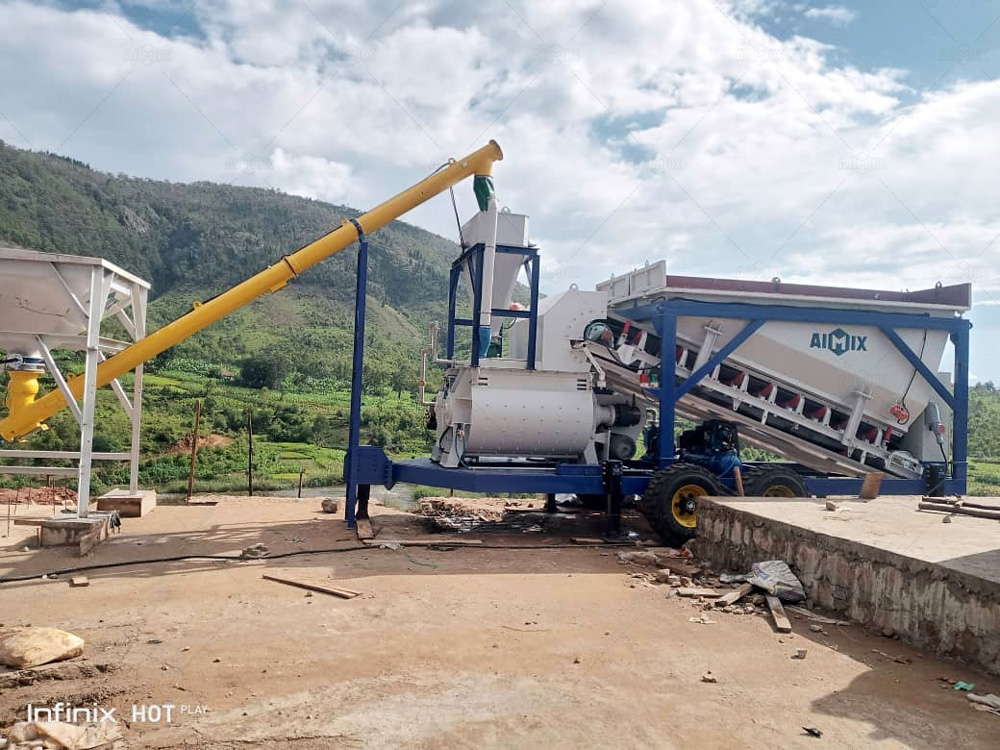
Selecting the appropriate portable concrete batch plant configuration is paramount for achieving sustained 200 m³ daily output. The foundational element is the mixing unit, where twin-shaft mixers have emerged as the industry standard for high-capacity operations. These mixers deliver superior homogeneity and faster mixing cycles compared to traditional pan-type designs, typically achieving 85% of maximum mix quality within 15 seconds and 95% homogeneity in just 30 seconds. For 200 m³ daily production, a mixer with 1500-2000 liter capacity provides the optimal balance between batch size and cycle time efficiency. The aggregate handling system must incorporate a four-bin configuration with individual weighing hoppers, allowing simultaneous batching of different aggregate sizes while maintaining precise material proportions. A belt conveyor system with a conveying angle of 18-22 degrees ensures efficient material transfer while minimizing spillage and wear.
The cement handling infrastructure requires careful consideration, with a minimum 50-ton cement silo equipped with a high-capacity screw conveyor capable of transferring 40-70 tons per hour. Water and admixture systems must feature precision dosing pumps with accuracy within ±1%, as even minor deviations can significantly impact concrete quality and strength development. The electrical control system should incorporate PLC-based automation with SCADA integration, enabling real-time monitoring of production parameters, inventory management, and automated fault diagnosis. This level of automation reduces operator intervention while ensuring consistent batching accuracy across multiple production cycles.
Key Performance Specifications
To reliably achieve 200 m³ daily output, the portable batch plant must meet specific performance benchmarks. The mixer should operate at a cycle time of 60-72 seconds per batch, translating to approximately 50-60 batches per hour under optimal conditions. The aggregate weighing system must handle 2400-3600 kg per batch with ±2% accuracy, while the cement weighing system should manage 700-1000 kg per batch with ±1% precision. Water and admixture dosing systems must maintain ±1% accuracy across the entire production range. The concrete mobile batch plant‘s installed power capacity typically ranges from 98-115 kW, excluding the screw conveyor system. These specifications ensure the plant can sustain continuous operation while maintaining the quality standards required for structural concrete applications.
Site Preparation and Installation Requirements
Proper site preparation is critical for maximizing portable batch plant productivity. The installation area should provide a level, compacted surface with adequate drainage to prevent water accumulation. The minimum required area is typically 15×20 meters, allowing sufficient space for material storage, equipment access, and vehicle maneuverability. Foundation requirements are minimal compared to stationary plants, with the portable design reducing civil works by up to 80%. The plant can be installed using standard “pick and carry” cranes within a few hours, with full commissioning typically completed within 1-2 days. This rapid deployment capability allows projects to commence concrete production almost immediately after site arrival, minimizing project delays and maximizing equipment utilization.
Operational Strategies for Sustained High Output
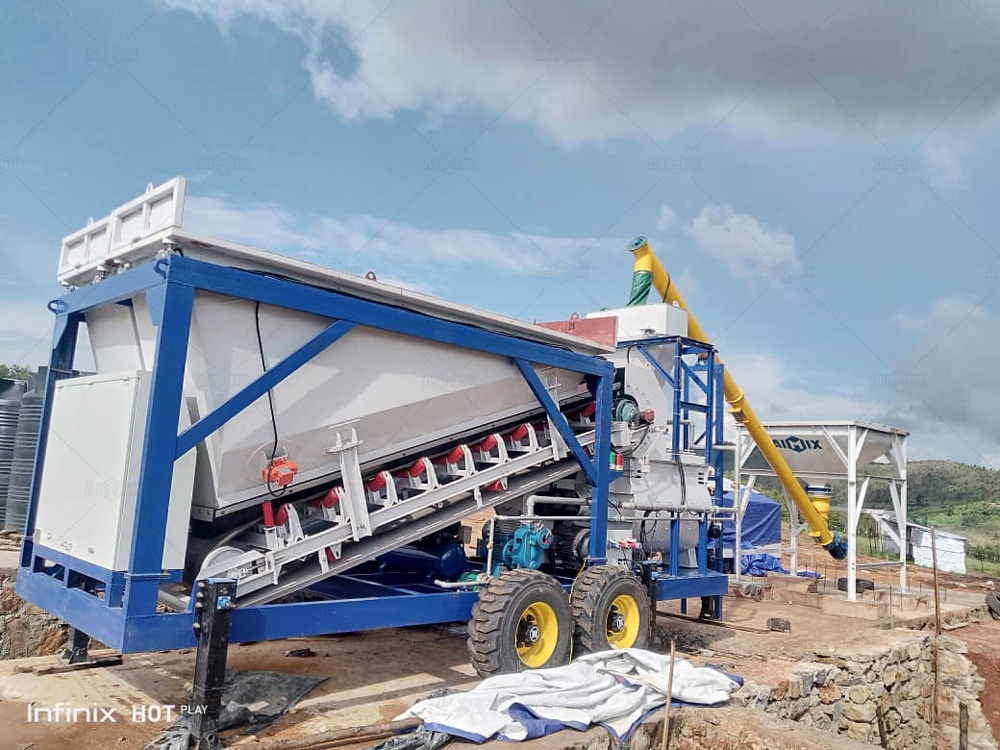
Maintaining consistent 200 m³ daily production requires implementing disciplined operational protocols that optimize equipment utilization while preserving concrete quality. The production schedule should incorporate strategic batching cycles that balance material availability, mixer capacity, and delivery requirements. For continuous high-volume output, implement a production rhythm that allows for systematic material replenishment without interrupting the batching sequence. This involves coordinating aggregate delivery schedules with production peaks, ensuring storage bins remain adequately stocked throughout the operational day. Cement silo levels should be monitored continuously, with automated alerts triggering replenishment when levels drop below 30% capacity.
Material handling efficiency directly impacts overall productivity. Implement a first-in-first-out (FIFO) inventory management system for aggregates to prevent segregation and maintain consistent material properties. Regularly calibrate weighing systems using certified test weights to ensure batching accuracy remains within specified tolerances. Establish clear communication protocols between the batching plant operator and concrete delivery vehicles to minimize waiting times and optimize truck turnaround. Utilize the small concrete plant‘s automation capabilities to pre-program multiple mix designs, allowing rapid switching between different concrete specifications without manual intervention. This operational flexibility is particularly valuable for projects requiring multiple concrete grades or specialized mixes.
Quality Control and Testing Protocols
High-volume production must not compromise concrete quality, necessitating rigorous quality control measures. Implement a comprehensive testing regime that includes slump testing every 50 m³, air content measurement every 100 m³, and temperature monitoring for every batch. Maintain detailed production records that document batch numbers, material proportions, mixing times, and test results. These records provide traceability and facilitate rapid identification of quality issues should they arise. Regularly verify the accuracy of water meters and admixture dispensers, as even minor deviations can significantly impact concrete performance. Conduct comparative strength testing between laboratory-cured specimens and field-cured samples to validate the curing conditions and strength development characteristics.
Personnel Training and Safety Procedures
Operator competence is fundamental to achieving sustained high productivity. Ensure all personnel receive comprehensive training on the specific plant configuration, including emergency shutdown procedures, troubleshooting common faults, and basic maintenance tasks. Implement a lockout-tagout (LOTO) system for all energy isolation points, with clear procedures for equipment access during maintenance. Regular safety briefings should address specific hazards associated with high-volume concrete production, including material handling risks, electrical safety, and confined space entry protocols. Maintain detailed maintenance logs that document all inspections, calibrations, and repairs, creating a comprehensive equipment history that supports predictive maintenance planning.
Maintenance Regimes for Continuous Operation
Preventive maintenance is the cornerstone of reliable high-volume concrete production. Implement a structured maintenance program that addresses daily, weekly, monthly, and quarterly tasks. Daily maintenance should include thorough cleaning of the mixer, conveyor belts, and storage bins to prevent concrete buildup that can lead to equipment corrosion and reduced efficiency. Inspect mechanical components such as conveyor belts, chains, and bearings for wear, misalignment, or tension issues. Check for leaks in water pipes, valves, and hydraulic systems, replacing seals or gaskets promptly to prevent pressure loss and contamination.
Weekly maintenance tasks should focus on lubrication of critical components, including mixer shaft seals, bearings, and gearboxes. Use manufacturer-recommended lubricants suitable for the operating environment and temperature conditions. Inspect mixing blades and liners for wear, as excessive wear can lead to concrete segregation and reduced mixing efficiency. Check the performance of safety features, including emergency stop buttons, material level sensors, and alarm systems. Monthly maintenance should include calibration of weighing systems using certified test weights, ensuring batching accuracy remains within specified tolerances. Inspect electrical components for signs of overheating, loose connections, or cable damage, tightening terminals and replacing damaged components as necessary.
Seasonal and Structural Maintenance
Seasonal variations require specific maintenance adaptations to ensure continuous operation. During winter months, implement freeze protection measures including draining water lines, switching to low-temperature lubricants, and installing heating elements in critical areas. In rainy seasons, verify the waterproof integrity of electrical enclosures and control panels to prevent moisture ingress and short circuits. Structural maintenance should include regular inspection of the plant’s foundation for signs of settlement or cracking, with prompt repairs to prevent equipment misalignment. Check metal frames, walkways, and staircases for corrosion, applying anti-rust coatings as needed and tightening all structural bolts to specified torque values.
Predictive Maintenance and Downtime Reduction
Advanced portable batch plants incorporate predictive maintenance capabilities through integrated monitoring systems. Utilize vibration analysis to detect early signs of bearing failure or mechanical imbalance. Monitor motor currents and temperatures to identify developing electrical issues before they cause unplanned downtime. Implement condition-based maintenance for hydraulic systems, monitoring oil quality and filter condition to determine optimal replacement intervals. Maintain a comprehensive spare parts inventory that includes critical components such as mixing blades, conveyor belts, and electrical control modules. This proactive approach to maintenance minimizes unplanned downtime and extends equipment service life, ensuring the concrete batch plant for sale remains available to meet production targets consistently.
Successfully operating a portable concrete batch plant at 200 m³ daily capacity requires a holistic approach that integrates equipment selection, operational discipline, and rigorous maintenance. The flexibility and mobility of portable plants offer significant advantages for projects with changing locations or limited site access, while their production capabilities rival those of stationary facilities. By implementing the strategies outlined in this guide, contractors can maximize productivity, maintain concrete quality, and optimize equipment utilization throughout the project lifecycle. The convergence of advanced automation, precision engineering, and systematic maintenance protocols enables portable batch plants to deliver exceptional performance in even the most demanding construction environments.