
When planning to invest in a Rubber Tyred Gantry (RTG) crane, one of the first and most critical questions buyers ask is: “How much does it cost?” However, unlike standard equipment with fixed pricing, an RTG crane is a highly customized material handling system. Its final price depends on a wide range of technical, operational, and commercial factors.
Many buyers make the mistake of requesting a price without providing sufficient technical details, resulting in vague estimates, repeated revisions, or unexpected cost increases later in the project. To avoid these issues, it is essential to understand how RTG crane pricing works and what information suppliers need to provide an accurate quotation.
This article explains, step by step, how to obtain a clear, realistic, and accurate RTG crane price quotation, helping you compare suppliers effectively and plan your investment with confidence.
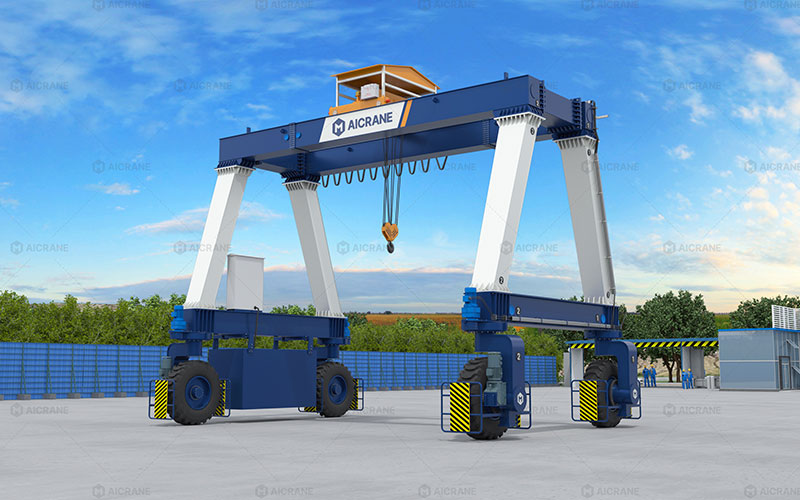
Understanding Why RTG Crane Prices Vary So Much
Rubber tyred gantry cranes are used across ports, container yards, precast concrete plants, steel yards, and wind power projects. No two applications are exactly the same. As a result, RTG cranes are almost always engineered-to-order, not off-the-shelf products.
Price variations arise due to:
-
Different lifting capacities and spans
-
Diverse mobility and steering systems
-
Environmental and site conditions
-
Power supply choices
-
Automation levels
-
Local compliance standards
Understanding this variability is the foundation for requesting an accurate quotation.
Clearly Define the Rated Lifting Capacity
The rated lifting capacity is the most basic pricing factor, but it must be defined correctly.
Key points to clarify include:
-
Maximum load weight (e.g., 20 ton, 40 ton, 80 ton, or 100+ ton)
-
Whether the crane will lift single loads or tandem loads
-
Presence of special lifting devices such as spreader beams, hooks, or grabs
Even small misunderstandings can significantly affect price. For example, a 40 ton gantry crane at full span costs considerably more than one rated for 40 tons only at reduced span.
Providing precise load data ensures suppliers design the correct steel structure and select appropriate drive systems, avoiding underpricing or later design changes.
Specify Span, Lifting Height, and Overall Dimensions
RTG cranes operate over wide working areas, making geometric parameters a major cost driver.
You should provide:
-
Clear span (distance between legs)
-
Maximum lifting height
-
Total crane height
-
Required clearance under the girder
-
Travel length and stacking layout (rows and columns)
A wider span means:
-
Larger girders
-
Higher steel weight
-
Stronger wheel assemblies
-
Increased drive power
All of these directly increase the quotation. Accurate site drawings or layout sketches greatly improve pricing precision.
Describe Ground Conditions and Travel Surface
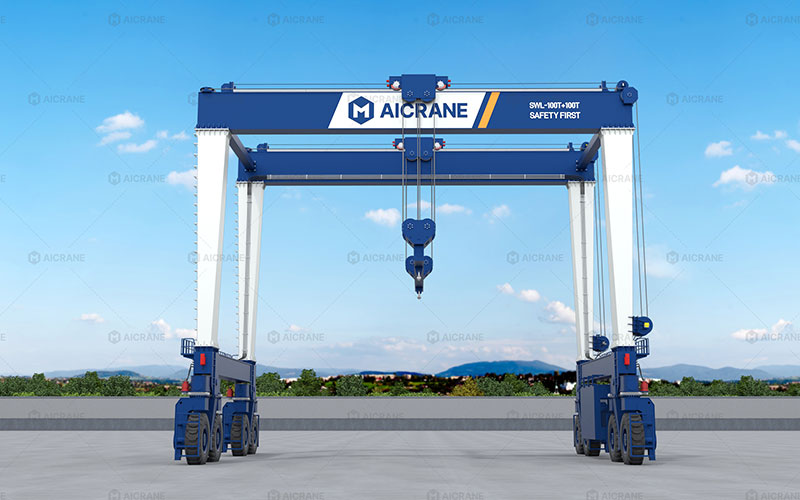
Unlike rail-mounted cranes, RTGs operate directly on the ground. This makes ground condition information essential for accurate pricing.
Suppliers need to know:
-
Whether the crane runs on concrete, asphalt, compacted gravel, or soil
-
Ground bearing capacity
-
Slope or unevenness of the working area
-
Drainage conditions and outdoor exposure
Poor ground conditions may require:
-
Larger wheels or bogies
-
Load-spreading tire configurations
-
Reinforced structural design
-
Reduced travel speeds for safety
All these adaptations influence cost. Without this data, suppliers often add large safety margins, inflating the quoted price.
Clarify Wheel Configuration and Steering Mode
One of the defining features of a rubber tyred gantry crane is its mobility system, which significantly affects price.
Common configurations include:
-
4-wheel, 8-wheel, or 16-wheel arrangements
-
Fixed wheels + driven wheels
-
All-wheel drive systems
Steering options may include:
-
Straight travel
-
Crab steering
-
Diagonal steering
-
90-degree pivot steering
-
Multi-directional steering systems
Advanced steering improves flexibility but requires:
-
Additional motors
-
Sophisticated control systems
-
More complex mechanical assemblies
Clearly stating your mobility requirements helps mobile gantry crane suppliers avoid underestimating complexity and ensures the quotation reflects real operational needs.
Choose Power Supply Method Carefully
Power supply selection is another major price factor that must be clarified early.
Typical RTG power options include:
-
Diesel generator sets
-
Cable reel power supply
-
Battery-powered RTGs
-
Hybrid diesel-electric systems
Each option has different implications:
-
Diesel systems have lower initial cost but higher operating expenses
-
Cable reel systems reduce emissions but require infrastructure
-
Battery RTGs have higher upfront cost but lower long-term energy consumption
If power preference is not specified, suppliers may quote the most conservative (and often more expensive) solution.
Define Control Mode and Automation Level
Control systems directly impact both price and productivity.
You should specify:
-
Cabin control, pendant control, or remote control
-
Semi-automatic or fully automated operation
-
Integration with terminal management systems (TOS)
-
Anti-sway, positioning, or collision avoidance systems
Higher automation increases:
-
Electrical system complexity
-
Software development cost
-
Commissioning time
Being clear about what level of intelligence is required versus optional prevents over-quoting or unnecessary features.
Identify Applicable Standards and Certifications
RTG cranes used in different regions must comply with different standards, such as:
-
FEM
-
DIN
-
ISO
-
EN
-
CMAA
-
Local safety or port authority regulations
Compliance affects:
-
Design safety factors
-
Material selection
-
Electrical component brands
-
Testing and certification costs
Informing suppliers upfront about required standards ensures the quotation includes all compliance costs, avoiding surprises during inspection or delivery.
Confirm Duty Cycle and Working Class
The working class (duty cycle) determines how robust the crane must be.
Important details include:
-
Average lifts per hour
-
Maximum daily operating hours
-
Expected service life (e.g., 10–20 years)
-
Load spectrum distribution
A crane designed for light intermittent use is much cheaper than one built for continuous container handling in a busy yard. Accurate duty data ensures the crane is neither under-designed nor overpriced.
Request a Detailed, Itemized Quotation
An accurate quotation should never be just a single number.
Ask for a breakdown that includes:
-
Steel structure
-
Hoisting mechanism
-
Travel and steering system
-
Electrical and control system
-
Power supply
-
Safety devices
-
Surface treatment and painting
-
Testing and inspection
-
Spare parts
-
Installation and commissioning (if applicable)
Itemized pricing allows you to:
-
Compare suppliers fairly
-
Identify optional vs essential costs
-
Optimize your configuration to match budget constraints
Consider Installation, Transport, and After-Sales Costs
The RTG crane price is not limited to manufacturing alone.
Clarify whether the quotation includes:
-
Transportation (FOB, CIF, DDP)
-
On-site installation or supervision
-
Commissioning and load testing
-
Operator training
-
Warranty terms
-
Spare parts availability
-
Long-term service support
A lower equipment price may be offset by higher installation or maintenance costs later.
Communicate Clearly and Share Complete Information
The most important step in getting an accurate RTG crane quotation is effective communication.
Provide suppliers with:
-
Technical specifications
-
Layout drawings
-
Application descriptions
-
Site photos or videos
-
Expected operating conditions
The more complete the information, the more precise and reliable the quotation will be.
Final Thoughts
Getting an accurate rubber tyred gantry crane price quotation is not about finding the lowest number—it’s about obtaining a realistic, transparent, and technically correct offer that reflects your actual operating needs.
By clearly defining capacity, dimensions, mobility, power supply, control systems, standards, and service requirements, you enable manufacturers to design the right solution and price it correctly from the start.
A well-prepared inquiry not only saves time and money but also leads to smoother project execution, fewer design changes, and a more reliable RTG crane over its entire service life.
If you approach the quotation process strategically, your investment in a rubber tyred gantry crane will deliver long-term value, efficiency, and operational confidence.